
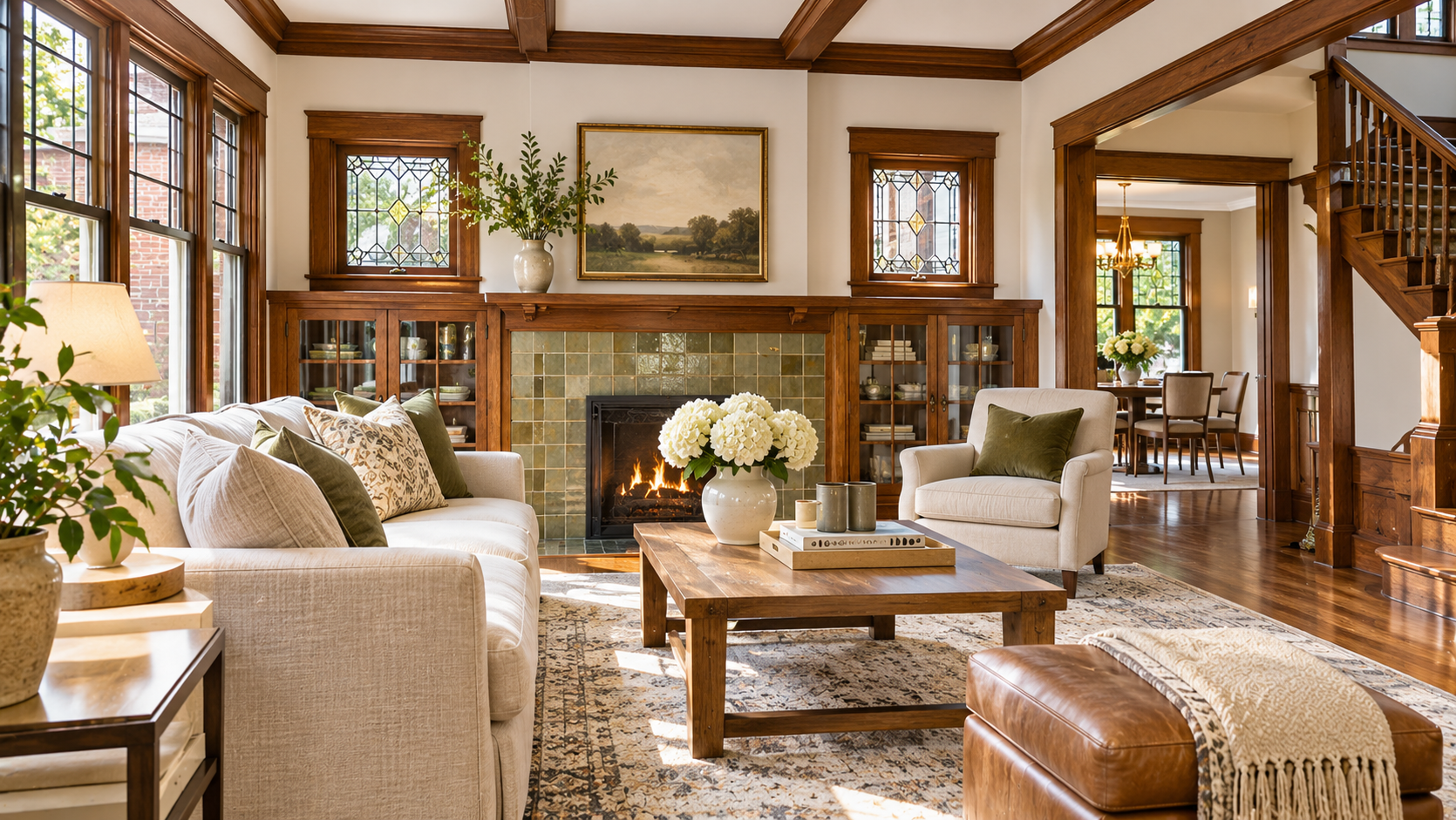
A Chicago bungalow renovation updates a one-and-a-half-story brick home, typically built between about 1910 and 1930, while keeping its character: art glass windows, oak trim, built-ins and the front sunporch. The most valuable projects are a functional kitchen, an added bathroom, a finished attic and a dry, finished basement. Our remodeling interior design and kitchen and bathroom design services plan it all. Book a free design discovery call.
What Is a Chicago Bungalow?
The Chicago bungalow is one of the city's signature house types. More than 80,000 were built in an arc 4 to 7 miles from downtown known as the Bungalow Belt, and they make up about a third of Chicago's single-family homes.
Classic features include:
Brick construction, one and a half stories over a full basement
A low-pitched hipped roof with wide overhangs, often with a front dormer
Raised front steps and a front porch, many later enclosed as sunrooms
Generous windows, sometimes with leaded art glass
Arts and Crafts woodwork, built-in cabinets and a compact, efficient floor plan
Bungalow Renovation in Chicago, IL: Keep the Character
The best bungalow renovations decide what to protect before anything is removed.
Restore or repair art glass instead of replacing it
Refinish original oak or fir trim, doors and built-ins
Refinish original hardwood floors wherever they can be saved
Match new trim profiles to the originals in added rooms
Keep the front sunporch as a light-filled reading room or office
Choose lighting, tile and hardware that suit the Arts and Crafts era without feeling like a museum
Updating the Function of a Chicago Bungalow
Bungalow kitchen remodel. Bungalow kitchens usually gain more from smart storage, cabinetry and lighting within the existing footprint than from gutting the plan. Widening one opening to the dining room can add flow without losing the home's structure. Plan around a realistic kitchen renovation timeline in Chicago, where cabinetry lead times set the pace.
Bathrooms. Many bungalows were built with one bathroom. Common upgrades include a second bath in the attic or basement and a powder room design tucked near the back entry.
Attic expansion. Finishing the attic, often with a larger rear dormer, adds bedrooms, a primary suite or a home office.
Basement finishing. Family rooms, guest suites and laundry belong downstairs, but waterproofing and flood protection come first.
Storage and mudrooms. Bungalows were built with little closet space. A back-entry drop zone, built-in benches and a pantry wall add storage that echoes the home's original built-in cabinetry.
Comfort and efficiency. Insulation, window repair or replacement and HVAC upgrades make older bungalows more comfortable through Chicago winters.
Chicago Bungalow Renovations Across the Bungalow Belt
Bungalows line streets across the Northwest and Southwest Sides, and in nearby suburbs. As a trusted Chicago Interior Designer, we design bungalow updates alongside greystones, two-flats and vintage homes throughout Chicago, and in Oak Park and Evanston. Many of the same decisions apply when renovating a Chicago greystone.
Owners can also certify their homes with the Chicago Bungalow Association, founded in 2000 as the Historic Chicago Bungalow Association, which offers free membership, educational resources and access to energy efficiency grant programs.
How Our Bungalow Renovation Design Process Works
Walk the home and note original details worth keeping
Plan layouts, storage and lighting for how you live now
Select finishes, fixtures and furnishings that respect the architecture
Prepare drawings and schedules for your contractor
Coordinate through construction, installation and styling
Explore our full service interior design, browse the interior design portfolio or meet Sarah Schwuchow, ASID, NCIDQ.
Chicago Bungalow Renovation FAQs
How much does it cost to renovate a Chicago bungalow?
Cost depends on scope. A cosmetic refresh with paint, lighting and refinished floors costs far less than a gut renovation with a new kitchen, added bathroom and finished attic. Kitchens, bathrooms, dormers and basement waterproofing are the biggest line items. A designer and contractor can price your exact plan.
Can you renovate a bungalow kitchen without ruining the character?
Yes. Bungalow kitchens usually gain more from smart storage, cabinetry and lighting design within the existing footprint than from gutting the plan, and the original detail elsewhere in the house stays intact. Period-appropriate tile, inset cabinetry and warm lighting help the new kitchen feel at home.
Should I open up the floor plan in my bungalow?
Usually only partly. Removing every wall can erase the woodwork, built-ins and proportions that make a bungalow special. Widening the opening between kitchen and dining room often delivers the flow people want while keeping the character. Any change to a load-bearing wall needs structural review and a permit.
Can you add a bathroom to a Chicago bungalow?
Yes. The most common locations are the finished attic, the basement or a small powder room on the main floor. Placing new fixtures close to the existing plumbing stack keeps cost down. Basement bathrooms may need an ejector pump depending on drain depth.
Can I add a dormer to my bungalow attic?
Many Chicago bungalows can take a larger rear dormer, which adds headroom for bedrooms, a primary suite or a home office. Dormers require architectural drawings, structural design and a City of Chicago permit, and zoning rules apply, so confirm feasibility before you design the finishes.
How do I keep a bungalow basement dry before finishing it?
Start with water management. Gutters, grading, sealing cracks, a sump pump and backflow protection help prevent water and sewer backups. Finish the basement with moisture-tolerant materials such as luxury vinyl or tile floors and mold-resistant drywall once the space stays dry.
Should I keep my original art glass windows?
Yes, whenever possible. Leaded art glass is one of the most distinctive and irreplaceable features of a Chicago bungalow. Specialists can repair, re-lead and add exterior storm windows for efficiency, so you keep the character while improving comfort.
Are there grants for Chicago bungalow owners?
The Chicago Bungalow Association offers free membership to owners who certify their bungalows, along with educational seminars, a referral directory and access to energy efficiency grant programs. Program availability changes, so check current offerings before you plan around them.
How long does a bungalow renovation take?
A single room may take a few months from design to installation. A kitchen or bath renovation generally runs six months to a year including design, permitting, construction and lead times. Whole-home bungalow renovations with an attic or basement addition commonly take a year or more.
Do I need an interior designer for a bungalow renovation?
An experienced interior designer helps you decide what to keep, plans layouts that fit the compact floor plan, selects finishes that suit the era and prepares drawings your contractor can price. That planning protects both the budget and the home's character.
How do I start a bungalow renovation in Chicago?
Begin with a free design discovery call to talk through your home, goals, budget and timeline. From there, we recommend the right level of design support for your project. Schedule your free design discovery call.