
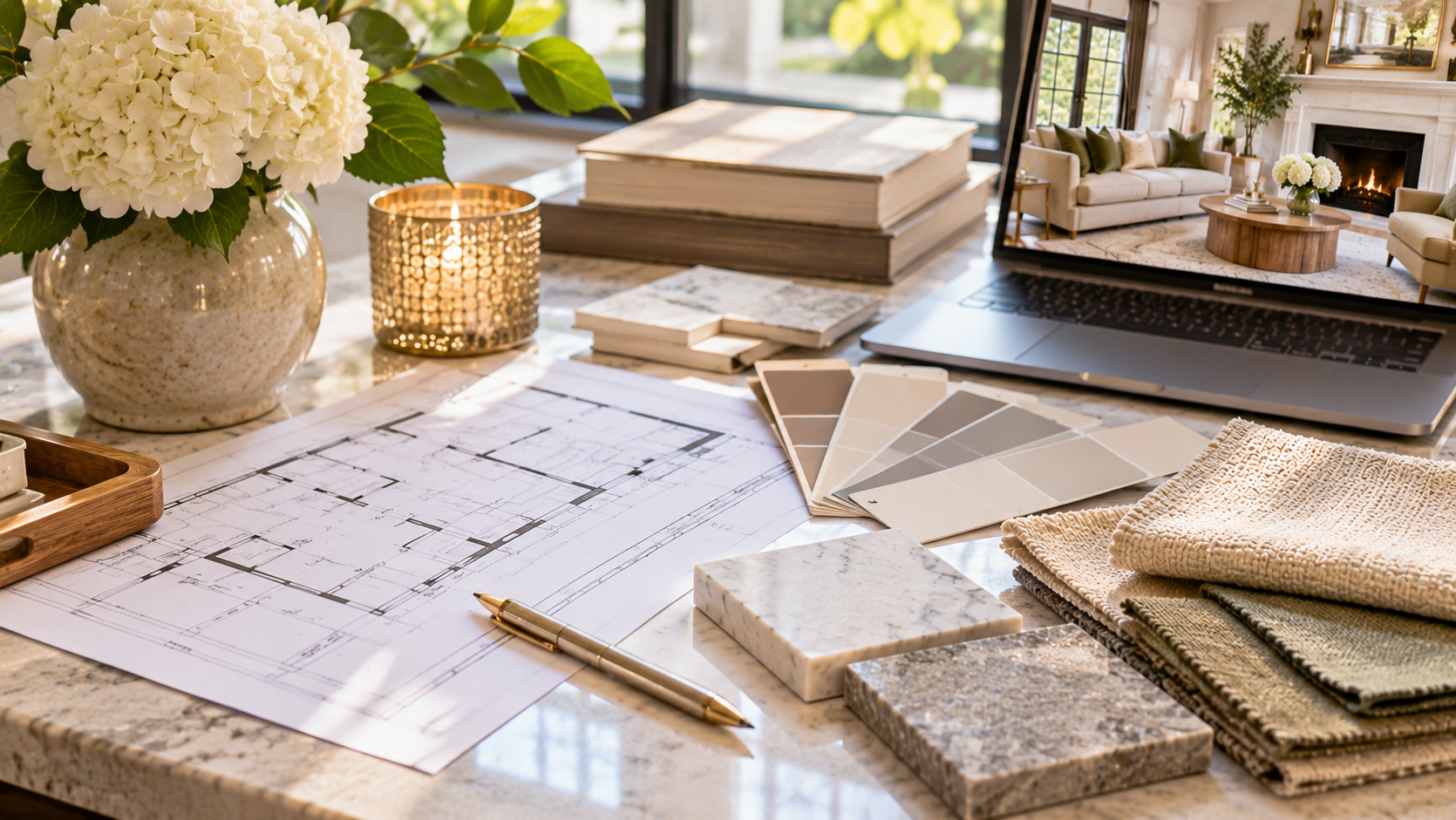
The phases of interior design are programming and discovery, schematic design, design development, documentation, procurement, and installation. Following them in order prevents the most expensive mistakes in a Chicago, IL renovation — buying furniture before layouts are set, or starting construction before finishes and cabinetry are specified.
Why the Order Matters
Almost every expensive design mistake comes from doing these steps out of sequence. Furniture bought before a floor plan exists. Tile ordered before the layout is drawn. Demolition started before cabinetry is specified. Each one costs money twice, once to buy and once to fix.
Phase 1 — Programming and Discovery
We document how you live, what you own, what stays, what goes, and what the space has to do. Measurements and existing conditions are recorded. Budget and timeline are discussed honestly. Nothing is designed yet, and that is the point.
Phase 2 — Schematic Design
Layouts and concepts. Floor plans, furniture arrangements, and an initial material and color direction. You see the shape of the project before any money is committed to product.
Phase 3 — Design Development
Selections get specific and priced. Cabinetry, tile, stone, plumbing fixtures, lighting, hardware, fabrics, and furniture are finalized. This is where most of the decisions live, and where a designer’s trade access and experience save both money and time.
Phase 4 — Documentation
Drawings, elevations, schedules, and specifications go to your contractor and trades. Tile layouts, cabinetry drawings, lighting and switching plans, and finish schedules mean the build matches the design rather than approximating it.
Phase 5 — Procurement
Orders are placed, lead times tracked, deliveries received and inspected, and damaged or delayed items chased. On a full-home project this is a significant amount of invisible work, and it is the phase clients are most relieved to hand off.
Phase 6 — Installation and Styling
Delivery, placement, hanging, styling, and a final walkthrough with a punch list managed to completion. This is the day the project stops being a plan.
How Long Each Phase Takes
Programming through design development commonly runs one to three months depending on scope. Documentation and permitting add weeks. Procurement is governed by lead times, and custom cabinetry, upholstery, and drapery are almost always the longest. A furnished room typically completes in a few months, a kitchen renovation in six months to a year, and a whole-home renovation in twelve to twenty-four months.
Frequently Asked Questions
Do all interior designers follow these phases?
Most professional firms follow a version of them. Sarah Jacquelyn Interiors follows the Phases of Design on every full-service project and handles everything from start to finish.
Can I skip a phase to save money?
Skipping documentation is the most common attempt and the most expensive. Without drawings and schedules, contractors interpret, and interpretation costs more than documentation.
When can I start buying furniture?
After schematic design, once layouts and scale are settled. Buying before that is the single most common way homeowners lose money on a project.
Related Interior Design Services in Chicago
Full Service Interior Design in Chicago
Interior Design Consultation in Chicago
Remodeling Interior Design in Chicago
New Construction Interior Design in Chicago
How Much Does an Interior Designer Cost in Chicago
Interior Designer vs Interior Decorator