


Design Trend: Luxury Game Sets
One hot design trend right now is displaying beautiful luxury game sets as both a practical and show-stopping accessory. Game night has never been more stylish! The best part, is you won’t want to store these games in the closet; you’ll want them on full display. Tap into your inner child but keep your sophistication with these gorgeous and whimsical game sets!
One hot design trend right now is displaying beautiful luxury game sets as both a practical and show-stopping accessory. Game night has never been more stylish! The best part, is you won’t want to store these games in the closet; you’ll want them on full display. Tap into your inner child but keep your sophistication with these gorgeous and whimsical game sets!
Monogram Tower from Louis Vuitton
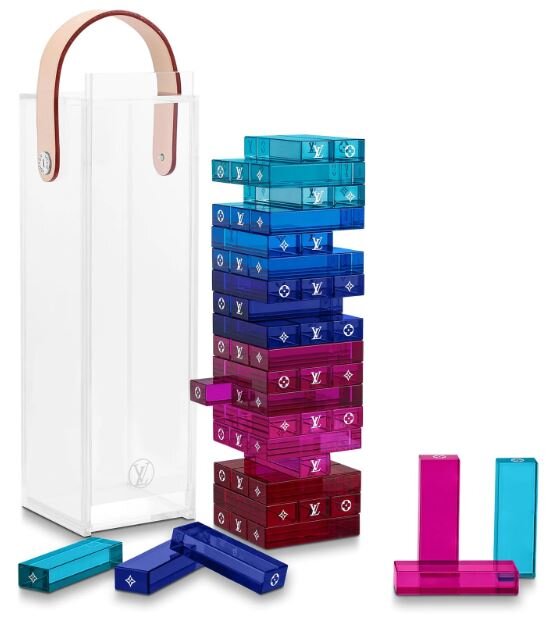
$3,050.00
We love everything about this, from the colors to the bold display. What a fun coffee table centerpiece for a chic living room!

What better way to play this classic, centuries-old game than in this beautiful leather set. We picture this Mahjong set in a dark-wooded study with cozy leather armchairs and hot cups of tea.
Brass Tic-Tac-Toe Set from
Jonathan Adler

$195.00
This tic-tac-toe set with marble base is perfect for all ages of game players. It looks so posh you won’t even care if each play ends in a “cat’s game!”

Price upon enquiry
We absolutely adore the mixture of color, texture, and pattern in this hand-painted backgammon game. This truly is a work of art and would be a dream to display, let alone use for a game night! Purling London has taken luxury gaming to the next level!

$6,500.00
Can you tell we really love Purling London?? This chess set is just so stunning! We love the reflective quality of the board, the gold finish of the chess pieces, and the pop of color integrated throughout. A masterpiece by Darren John that you can play with!
Chess 7-in-1 Heirloom Edition Game from
Pottery Barn

$399.00
Not only is this chess set asking to be displayed, you also get 6 more games included! Made of solid walnut, this sturdy game set will be around for generations. Classically beautiful, yet a little more economical and the perfect gift!

Need help finding fun & creative accessories for your space? Schedule a design consultation today!

Our Latest Tile Crush
While sourcing tile for a client, we recently stumbled upon an amazing tile manufacturer, New Ravenna. We just want to gush about their amazing product! Their beautiful designs and handmade-in-America tiles and mosaics are fully customizable, unique and full of life, and truly a way to bring art into your everyday space. Here’s a little bit more about New Ravenna and our favorite picks from their many collections.
We recently stumbled upon an amazing tile manufacturer, New Ravenna, and just want to gush about their gorgeous product! Their beautiful designs and handmade-in-America tiles and mosaics are fully customizable, unique and full of life, and truly a way to bring art into your everyday space. Here’s a little bit more about New Ravenna and our favorite picks from their many collections.
“Our products are not only trendsetting, they bring art to practical spaces. Design is in our DNA. ” - New Ravenna

Living Wall: A waterjet Mosaic from New Ravenna’s Broad Street Collection


New Ravenna’s handmade stone and glass mosaics are designed and manufactured by their team of over 100 artisans in the scenic Exmore, Virginia and can be found in nearly 200 showrooms worldwide. Our favorite showroom for New Revenna tile, The Fine Line - Chicago.
Some of Our Favorites

Ptolemy’s Cosmos: a hand-nipped stone mosaic, shown in 13 colors of honed stones with brushed Brass accents part of The New World collection by Sasha Bikoff

Janus: A waterjet mosaic shown in polished Calacatta Tia and Saint Laurent from the Illusions Collection
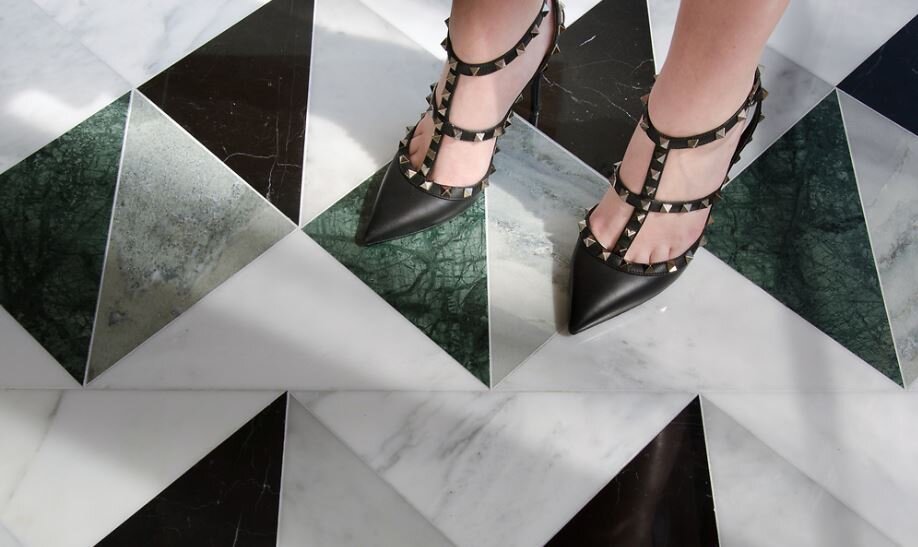
Arbus Medium: a hand-cut mosaic shown in polished Calacatta Radiance, Spring Green, Kay’s Green, Nero Marquina, and Carrara; part of the Palazzo collection
The intricate detailing of these beautiful tiles and mosaics can be subtle, yet stunning, or the complete show-stopping centerpiece of your space. New Ravenna has a number of different collections to fit every aesthetic and design taste. Their designs are so versatile and can be used in residences and commercially.
We were so floored to see these amazing designs below from their KIDDO line by Cean Irminger!

Fleet: a handnipped mosaic in Lapis Lazuli, Iolite, Absolute White, and Moonstone jewel glass, part of the Kiddo Collection by Cean Irminger

Gato de los Muertos: Special Edition mosaic by Cean Irminger

Wild Ones: a waterjet mosaic in Peridot, Olivine, Obsidian, Tortoise Shell, Amber, Citrine, Sardonyx, and Absolute White jewel glass, part of the Kiddo Collection by Cean Irminger
Pillowed Tile
The first tiles that caught our eye from New Ravenna were their pillowed tiles, which have a softer, more weathered look. They’re perfect for someone who wants a more casual style but still wants to utilize natural stone. Check out these unique designs!

Cable Knit Large: a waterjet mosaic in Venetian honed Dolomite, part of the Palazzo collection

Astronomy: a waterjet mosaic in Venetian honed Nero Marquina and Brass, part of the Trove collection
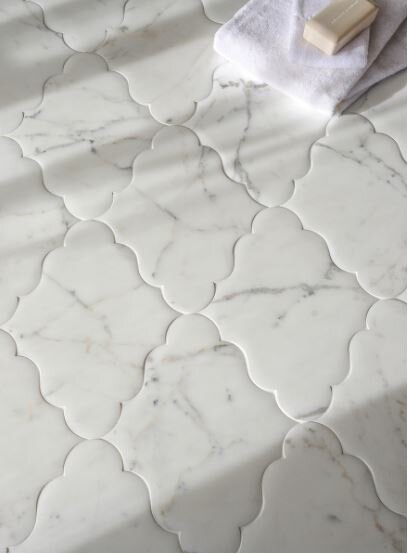
Djinn Grand: Venetian honed Calacatta Tia, hand-cut mosaic from the Studio Line

Need help choosing the perfect tile for your space? Schedule a design consultation today!

The Pros and Cons of Open Kitchen Shelving
Opting for an open shelf concept in your kitchen can create a stunning visual for your kitchen design. There is so much flexibility in the design choices of open shelving; create an airy, open feel in small kitchen; showcase a minimalist and rustic lifestyle; communicate modern sophistication with clean lines. However, open shelving is not everyone. On the fence about whether this design style is for you? Read on as we look a little more in depth on the pros and cons of utilizing open shelving for your kitchen..
Opting for an open shelf concept in your kitchen can create a stunning visual for your kitchen design. There is so much flexibility in the design choices of open shelving; create an airy, open feel in small kitchen; showcase a minimalist and rustic lifestyle; communicate modern sophistication with clean lines. However, open shelving is not everyone. On the fence about whether this design style is for you? Read on as we look a little more in depth on the pros and cons of utilizing open shelving for your kitchen..
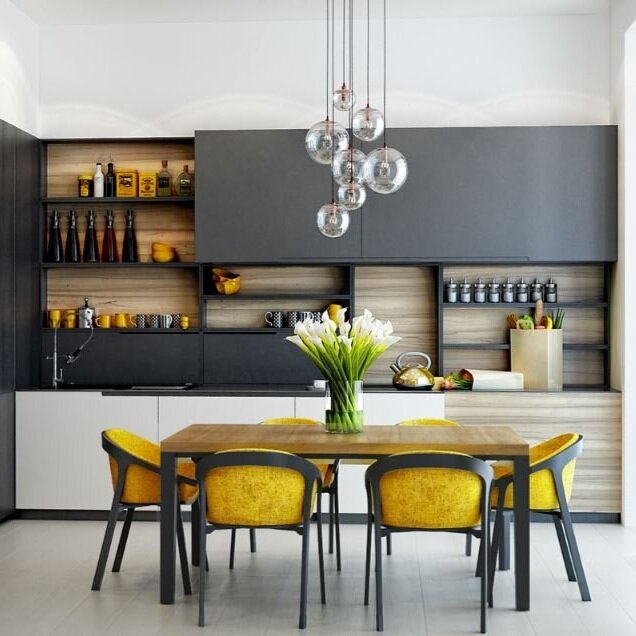
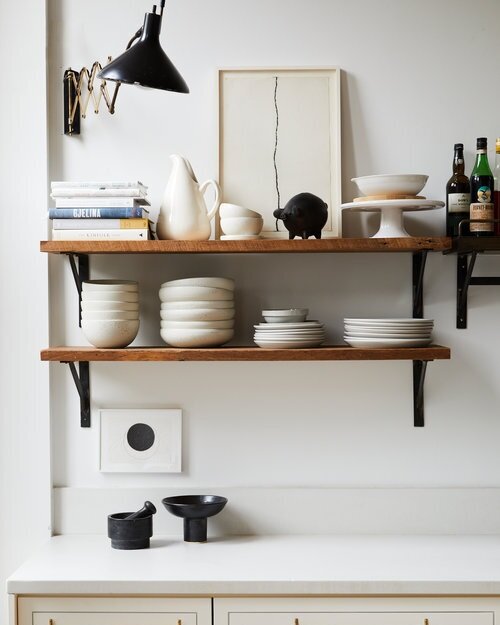
An Honest Discussion on Open Kitchen Shelving
Open shelving in a kitchen seems to be a design trend that you either love or hate. There are quite a few benefits to having all your kitchen items on complete display, but it might not be for everyone.
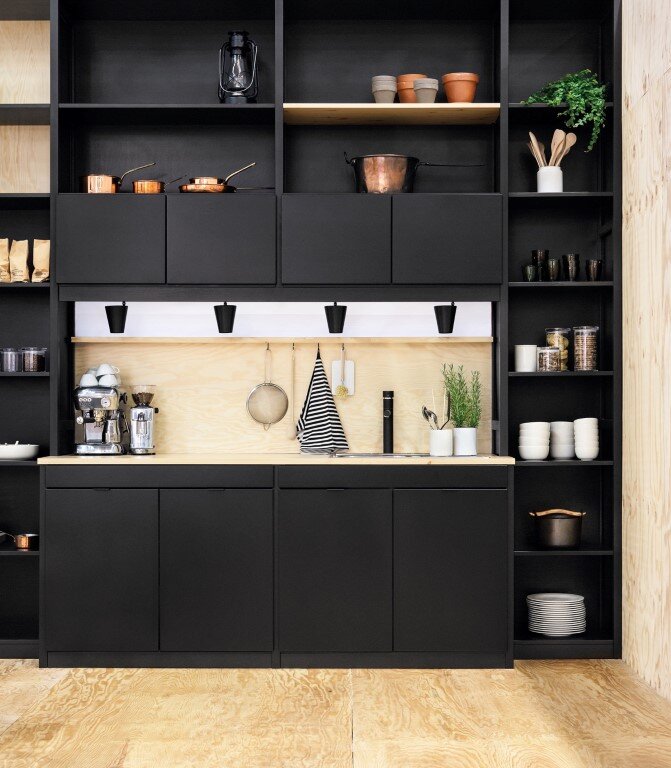
Accessibility
With opening shelving, you’ll have easy access to all your everyday kitchen necessities, such as glasses, dishes, and cookware. Guests will feel welcome with your home life showcased, and no one will have to ask where the glasses are.It also makes unloading that dishwasher a little simpler without having to worry about opening and shutting cabinet doors. However, it goes without saying that your dishes are now on display and should be aesthetically pleasing to your space. You’ll have to keep everything well organized and to a minimum. No one likes to have their clutter out for the world to see!
You can also take this as an opportunity to Marie Kondo your kitchen and get rid of all those dishes and kitchen items you have stashed in the back of the cupboards (oh hi, gravy boat I’ve never used before!) but haven’t had the motivation to donate.
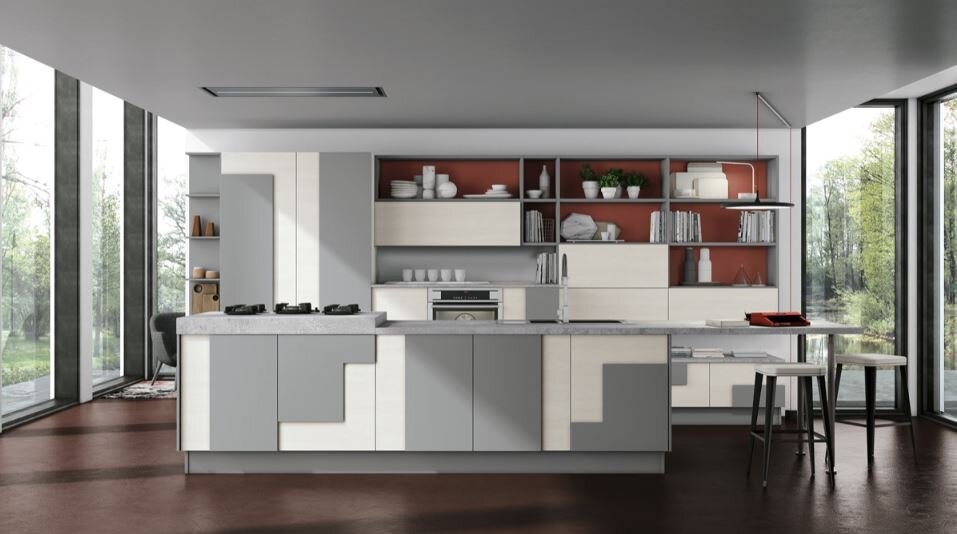
Aesthetic
Open shelving can help a tiny kitchen feel open and airy just by taking those cabinet doors out of the equation. You’ll also be able to utilize the wall behind as a design aesthetic, whether is be a beautiful backsplash tile, natural wood, or a popping paint color. The shelves themselves can range from sleek, über-modern to rustic, unfinished wood, centering your kitchen design around your storage. Have some beautiful serving dishes, vases, or pitchers to display? Open shelving is a great way to get everyday aesthetic use out of these items, even if you don’t use them on a day-to-day basis. LED lights are easy to install on your shelving to help create a displayed feel while adding a bit more light to your space. You can also consider using some of your open shelving to display a few books, greenery or herb gardens, and decorative pieces that you might ordinarily store on the counter.

Maintenance
While there’s technically not a huge amount of maintenance for an open shelving concept in your kitchen, you will have to be diligent about keeping your shelving and kitchen items clear from dust and debris. You probably won’t need to worry about your everyday dishes and most-used items, but larger serving platters and pitchers may get dusty from sitting unused for the majority of the time. Shelves lower to the ground are especially susceptible to dust (or animal hair!) accumulation, so you’ll want to stay vigilant when it comes to your kitchen cleaning routines. If you’re using an untreated wood, you'll need to oil the shelves regularly to keep them from drying and cracking.
One more thing you’ll want to be sure of before you start packing the shelves with your kitchen items is how much weight each shelf can hold. Be proactive and choose quality material for your shelves to ensure they won’t warp, sag, or damage your walls. Better yet, we highly recommend using a professional to help choose the right shelves, braces, and installation for your shelving. The last thing you want is for your good china to come crashing down!

Cost and Compromise
One of the best perks of opening kitchen shelving is that it can cost a fraction of the price for traditional above-the-counter wood cabinets. Less material and labor = less money. However, the minimalism look of going completely open for your shelving is not for everyone. A great compromise for those that love the look but aren’t read to fully commit is opting for built-in open shelves flanked by closed cabinets. Another great idea for those who want their items on display but are wary of the open concept is using glass cabinet doors. This look can still give your kitchen the airy, light feeling of open shelving, but protects your items from dust accumulation.
Need help deciding on new shelving or cabinets for your kitchen? Schedule a design consultation today!

Our Top 5 Favorite Sconces
A beautiful interior needs the right kind of lighting to really shine! Wall sconces are a great way to brighten up a room without adding extra floor lamps or tables for table lamps. They’re practical, but also come in so many styles and designs that it’s easy to choose one to really communicate a personality and tone for the space. Sconces can be simple and functional, highlighting certain art pieces or serve as the perfect bedtime reading light. They can be ornate and fun, tying a design together while communicating sophistication. Here are Sarah Jacquelyn Interior’s top 5 wall sconces for 2020!
A beautiful interior needs the right kind of lighting to really shine! Wall sconces are a great way to brighten up a room without adding extra floor lamps or tables for table lamps. They’re practical, but also come in so many styles and designs that it’s easy to choose one to really communicate a personality and tone for the space. Sconces can be simple and functional, highlighting certain art pieces or serve as the perfect bedtime reading light. They can be ornate and fun, tying a design together while communicating sophistication. Here are Sarah Jacquelyn Interior’s top 5 wall sconces for 2020!
Ersa Wall Light from Lightology

Laurie’s choice: The Ersa Wall Light was designed by William Brand and named for the Greek Goddess of dew. It’s also available in several finishes and shades. Laurie says, “This ethereal sconce reminds me of a dew drop on a new spring branch. I love the organic shape of the clear shade. The finish is perfect for a chic living room or entryway.”

Bianka’s choice: The Lloyd Jeweled Sconce was designed by Kate Spade New York. Bianka says, “To me, I think of sconces as the "jewelry" of the room. These literally look like earrings, and that's why I love them!” We think this sconce would be a fabulous addition to a stylish bedroom.
Ori Sconce from Circa Lighting

Sarah’s Choice: Designed by Kelly Wearstler, the Ori Sconce definitely makes some excellent points! Sarah says, “The proportions of this sconce are great at 20” x 7”. I love the angles and the movement they create. I’m definitely feeling the antique-burnished brass finish and think it’s just beautiful. I’d love to use this dynamic sconce in an entryway with a fun textured wall covering, maybe a dark and moody vibe with a decorative mirror.”
Yale Large Sconce from Arteriors

Bianka’s choice: The Yale Sconce, designed by Arteriors, displays rows of delicate antique brass chains draped over the frame with staggered lengths, giving it a tassel effect. Bianka says, “I love that these sconces are super long and dramatic! I love their push and pull of elegance and edginess.”
Monkey Hanging Wall Lamp from Lightology

Sarah’s Choice: This Monkey Hanging wall lamp, designed by Seletti, is a fun and unique way to add a little extra lighting to your space. It is available in white or black resin and is available with an optional lampshade. Sarah says, “I love the whimsy of this fixture. It's unexpected and a definite conversation piece. I would put it in a small space, like a laundry room, powder room, or walk-in closet. Play up the theme with a jungle wallpaper print!”
Need help finding the perfect wall sconces for your space? Schedule a design consultation today!
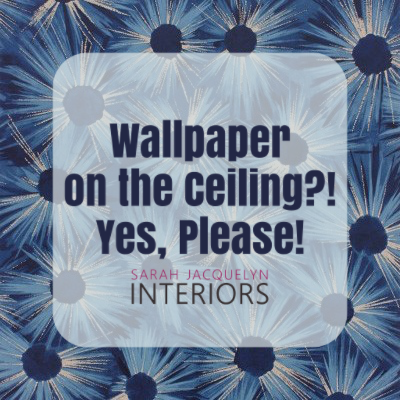
Wallpaper on the Ceiling?! Yes, Please!
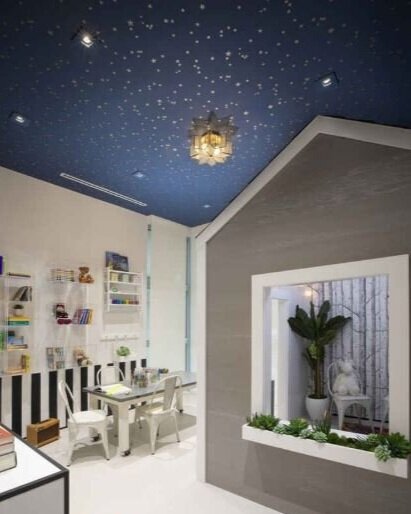
A room traditionally has four walls; think outside (or on top of) the box and see your ceiling as the fifth wall! Wallpapering ceilings is a design trend that is quickly becoming more mainstream. It’s a great way to introduce more color, texture, and a “pop” of character to any room.
A room traditionally has four walls; think outside (or on top of) the box and see your ceiling as the fifth wall! Wallpapering ceilings is a design trend that is quickly becoming more mainstream. It’s a great way to introduce more color, texture, and a “pop” of character to any room. Wallpapers have come so far in the last 20 years, utilizing eco-friendly materials and beautiful patterns and images in a variety of mediums. By choosing the perfect wallpaper, you can create illusions of more light, more height, and a bigger room size. Here’s how we like to use wallpaper on ceilings at SJI!

When to Use it
A wallpapered ceiling can do wonders for a room with already busy walls, such as a dining room with large, open doorways and a lot of windows. It’s a great way to introduce more pattern and texture without a chaotic feel. The clean palette of a ceiling gives the wallpaper a chance to really make a statement of it’s own. After all, white ceilings are boring!
Whether you’re adding more color to a room with neutral walls or complimenting another pattern, it’s essential to pair your wallpaper with the right paint or wall covering to really execute the design.
When mixing with another wall covering, try to vary the scale and pattern so as not to overwhelm the room. A busier pattern on the wall would warrant a simpler, geometric pattern on the ceiling.

These gorgeous wall papers from Thibaut are a great example of appropriately mixing patterns, using “Brad” on the ceiling to compliment walls covered in “Peacock Garden”.


What Patterns to Use
Geometric patterns with some contrast are great for ceilings. Because they’re are non-directional, undefined patterns will look good from all angles and won’t look like they’re upside down. Since a ceiling is not directly in your line of vision, you’ll want something with contrasting color patterns so it doesn’t get muddled in your peripheral. Smaller scaled patterns don’t translate well at a distance, so it’s best to keep them to a larger scale.
We love to utilize a metallic paper to add texture while still reflecting light into a room. It's a great way to introduce more light into a dark or moody room.
Dramatic floral wallpapers can introduce a bit more emotion into a room that would otherwise feel plain. Because of the intensity of floral prints, we suggest using them with a more neutral palette for the rest of the room. You’ll also want to ensure you choose a floral pattern that doesn’t seem to have a “right side up” feel.
Consider Professional Installation
We strongly recommend hiring a professional contractor to install any wallpaper, but especially when it’s installed on the ceiling. There is no room for error, so you want someone with experience and the right supplies to get the job done efficiently and correctly. Mistakes made while wallpapering can’t be covered up on a ceiling and will be there as long as the wallpaper is up.
It’s also important to consider just how much your time is worth. A professional who is experienced with wallpaper can quickly and efficiently get the job done, while you may be spending twice or more of the time trying to get it perfect. The right tools required for installation of wallpaper alone could cost you quite a bit of money and a professional installer will have their own. Plus, once they’re done, you’re not the one expected to clean up the leftover mess.
Working with an interior designer for your wallpaper needs ensures that you get the right measurements for your space so you’re buying just the right amount of wallpaper. A designer can also assist you in finding expert installation of your wallpaper so it’s done well the first time.
Need help finding the perfect wallpaper for your space? Schedule a design consultation today!

How to Maintain Your Quartz Countertops
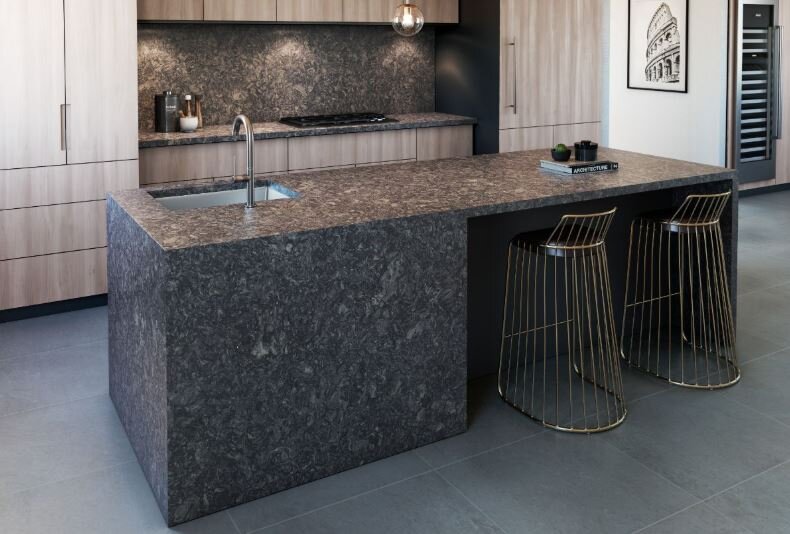
Quartz is a popular choice for countertops given that it is harder than granite, comes in a variety of colors, textures, and thicknesses, and is easy to care for. However, there are a few do’s and don’ts when it comes to your quartz. If cared for correctly, your quartz will last for years to come! Here’s how we recommend you care for your quartz surfaces.
Quartz is a popular choice for countertops given that it is harder than granite, comes in a variety of colors, textures, and thicknesses, and is easy to care for. This man-made countertop is non-porous and non-absorbent so no need to worry about it harboring harmful bacteria. However, there are a few do’s and don’ts when it comes to your quartz. If cared for correctly, your quartz will last for years to come! Here’s how we recommend you care for your quartz surfaces.


How to Clean Quartz
Quartz is often known for being maintenance-free stone. While you won’t have to seal or polish your quartz countertops, you’ll still have to clean them and avoid certain chemicals to keep them in beautiful condition.
The best and simplest way to clean your quartz is by using a soft cloth with water and dish soap. This should remove any dust, food residue, or spills. It is important to note that spills should be cleaned up soon after they occur, as stains from juices or coffee could set in if left to sit.
In the event of tough stains or sticky residue on your quartz, Goo Gone is a safe option. Simply cover the spot, let it soak for 5-10 minutes, and wipe away.
It’s always best to check with your quartz manufacturer before using any cleaning product on your surface. See Cambria’s approved list of cleaners here.

Things to Avoid
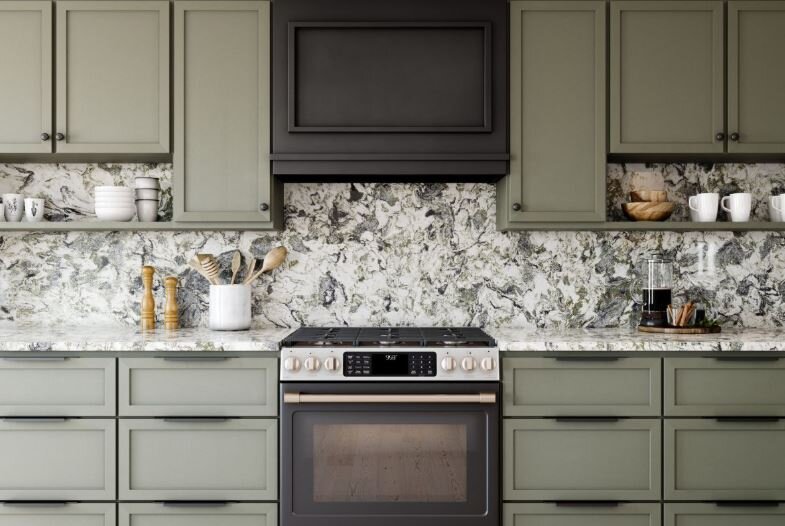
Never use a bleach-based product on your quartz, as this can damage your countertops. You’ll also want to stay away from any abrasive sponges or cloths and cleaners such as Comet® or Soft Scrub®.
Stone surfaces such as quartz can be easily damaged by sudden, excessive heat. Be sure to avoid placing hot pots, pans, and casserole dishes directly on your quartz countertops and tables. Always use a hot pad or trivet!
While quartz is considerably durable and scratch-resistant, this does not mean it is completely scratch-proof. It is always recommended to use a cutting board when chopping or cutting on your countertops.
Need help finding the perfect countertops for your space? Schedule a design consultation today!

Get NCIDQ Certified in 2023!
If you’re interested in learning more about the NCIDQ Exam, why it’s important, and how it can benefit you as a designer, you’re in the right place! I’m Sarah Schwuchow, a Registered Interior Designer in Illinois and I passed the NCIDQ exam in the Spring of 2018. I am also a CIDQ Ambassador, which means I help mentor exam candidates, educate students, and promote the value of NCIDQ certification to the public. I’m on a mission to help other designers pass the NCIDQ exam and become Registered Interior Designers!


Hello! I’m so glad you are interested in learning more about the NCIDQ Exam! I’m Sarah Schwuchow, a Registered Interior Designer in Illinois and I passed the NCIDQ exam in the Spring of 2018.
I am also a CIDQ Ambassador, which means I help mentor exam candidates, educate students, and promote the value of NCIDQ certification to the public. I’m on a mission to help other designers pass the NCIDQ exam and become Registered Interior Designers!
If you’re interested in learning more about the NCIDQ Exam, why it’s important, and how it can benefit you as a designer, you’re in the right place!
It’s been 3 years since I earned my NCIDQ certification. This certification has benefited me in numerous ways, from opening my own business to having the confidence and knowledge to effectively communicate on a job site. This exam is not just for commercial interior designers; I use my NCIDQ knowledge every day as a residential interior designer and highly recommend all interior designers work towards this certification.
I always felt there was a need for more NCIDQ mentorship among the design community. After passing the exam, I looked into the CIDQ Ambassadors program where I could provide mentorship to candidates and educate Interior Design students on the value of the NCIDQ exam. I strive to be a resource to other designers, sharing my NCIDQ journey and encouraging them to take the exam.
I have helped many aspiring designers work towards this certification as well. In 2019 I created a study group through ASID to help designers pass the NCIDQ exam. Since then, the group has grown and we now partner with IIDA IL to broaden our reach.
Just starting to think about taking this exam can be a daunting task in itself! I’m here to help break down the requirements and get you on track for taking the exam. Keep reading below for step-by-step instructions on how you can become NCIDQ Certified.
Please note - the statements on this website are my own and not a reflection of CIDQ as an organization. This blog post is intended to be a supplementary guide for your NCIDQ journey. Please visit CIDQ.org for more information regarding qualifications, expectations, current prices, etc. Familiarize yourself with the CIDQ website, eligibility requirements, application process, registration process, and important dates and deadlines!
Application deadline
Applications for the Spring 2023 Exam needed to be
submitted by January 31st and July 31st for the Fall 2023 Exam.
Do NOT submit your application until you are ready to begin sitting for the NCIDQ Examination. Your testing windows are based on application approval.

What is NCIDQ Certification and Who is CIDQ?
CIDQ History
CIDQ was created by the American Institute of Interior Designers (AID) and the National Society of Interior Designers (NSID) in the late 1960s. The group officially incorporated as a not-for-profit in 1974 and was the basis for issuing credentials to Interior Design professionals. The AID and NSID would eventually merge to become what is now the American Society of Interior Designers. CIDQ went on to run as an independent organization, which administers the NCIDQ exam
What Does NCIDQ Mean?
The NCIDQ exam stands for the National Council for Interior Design Qualification. This is a globally recognized exam and the highest standard an Interior Designer can earn. The NCIDQ Exam was created by the Council for Interior Design Qualification (CIDQ). Once you pass all three sections (IDFX, IDPX, Practicum) of the the NCIDQ Exam, you become an NCIDQ Certificate Holder. You can then use the NCIDQ appellation after your name: Sarah Schwuchow, NCIDQ. The exam is offered for the entire months of April and October at Prometric Testing Centers. All three sections of the exam are now computerized.
Why Does NCIDQ Certification Matter?

NCIDQ Certification matters because it is an indicator of our proficiency and knowledge.
The Interior Design profession is still relatively young at only about 100 years old.
We are still working towards reasonable regulation, the title acts, practice acts, stamping abilities, and legislative rights for our profession.
NCIDQ Certification helps to create a standard to ensure designers have the knowledge, education, and experience to create spaces that meet codes, regulations, ADA requirements, health, safety, and welfare.
I am proud to be an NCIDQ Certified Interior Designer that can contribute to the development of the Interior Design profession as a whole.
From a legislative standpoint in Illinois, it is critical that we ensure the “Registered Interior Designers Act'' stays in effect, as many legal benefits come with this title such as lien rights.
In 2022, a major advancement in our profession was made. Governor Pritzker signed historic legislation that establishes practice rights for interior designers in Illinois. Read more Here.

10 Reasons Why You Should Take the NCIDQ Exam
NCIDQ Certification sets you apart from unqualified designers and decorators.
It is an indicator of your proficiency and knowledge.
NCIDQ Certification shows your commitment to the Interior Design profession.
You’ll earn respect among your colleagues, employers, and clients.
You’ll have the potential to earn more money and promotions, as many firms require NCIDQ Certification.
Increasing the number of registered/licensed designers elevates our profession.
NCIDQ Certification helps with legislation and Interior Design rights.
In Illinois, you must be an NCIDQ Certificate Holder to become a Registered Interior Designer, which gives you lien rights and practice rights now!
Registered Interior Designers in Illinois now have the right to file liens. Unregistered designers and decorators do not hold this right.
“To date, more than 30,000 people around the world have earned NCIDQ Certification, the gold standard for interior design professionals” (CIDQ.org).
What’s on the NCIDQ Exam?
“The strenuous requirements of the NCIDQ Examination give clients and employers added confidence in the caliber of work from NCIDQ Certified designers” (CIDQ.org).
The NCIDQ examination is no walk in the park. The level of difficulty proves that an NCIDQ designer possesses the knowledge and expertise for building systems, codes, construction standards, contract administration, design application, professional practice, and project coordination.
The exam is broken down into 3 parts: Interior Design Fundamentals (IDFX), Interior Design Professionals Exam (IDPX), and Practicum. Each section measures a candidate’s knowledge and proficiency on different topics related to health, safety, and welfare. All exams are taken during the entire month of April and October. Applicants have five years to complete all three exams.
Fundamentals Exam (IDFX)
Eligibility: Candidates can take this part of the exam before completing their work experience hours. This exam can be taken as early as a student’s final year of school for a Bachelors's or Masters's program.
Exam Format: 125 multiple-choice questions (100 Scored and 25 Pilot Questions)
Exam Length: 3 Hours
Application Fee for IDFX Only: $95.00
Registration Fee: $295.00
Testing Location: Remote Protectoring or Prometric Facility
Passing Score: 500 (Scores are weighted and on a scale of (200-800)

Professional Exam (IDPX)
Eligibility: Candidates must complete their education and work hours before applying for this exam. *WORK EXPERIENCE IS CHANGING IN 2024
Exam Format: 175 multiple-choice questions (150 Scored and 25 Pilot Questions)
Exam Length: 4 Hours
Application Fee for IDPX and Prac Only: $145.00
Application Fee for all 3 Sections: $225.00
IDPX Registration Fee: $355.00
Testing Location: Remote Protectoring or Prometric Facility
Passing Score: 500 (Scores are weighted and on a scale of 200-800)

Practicum (PRAC)
Eligibility: Candidates must complete their education and work hours before applying for this exam. *WORK EXPERIENCE IS CHANGING IN 2024
Exam Format: 114 Questions (105 scored, 9 Pilot Questions), Interactive computerized exam consisting of 3 case studies: large commercial, small commercial, and multi-family residential. No AutoCAD, or Hand Drawing.
Exam Length: 4 Hours
Application Fee for IDPX and Prac Only: $145.00
Application Fee for all 3 Sections: $225.00
Practicum Registration Fee: $460.00
Testing Location: Prometric Facility
Passing Score: 500 (Scores are weighted and on a scale of 200-800)

How Long do I have to Take the Exams?
ALL THREE SECTIONS: Must be passed within 10 exam administrations ( About 5 Years)
IDFX ONLY: Must be passed within 4 exam administrations + IDPX & PRACTICUM (2nd stage for IDFX ONLY applicants): Must be passed within 10 exam administrations.
Exam testing windows are April and October
Ready to Take the Exam?
Step 1: Eligibility Requirements
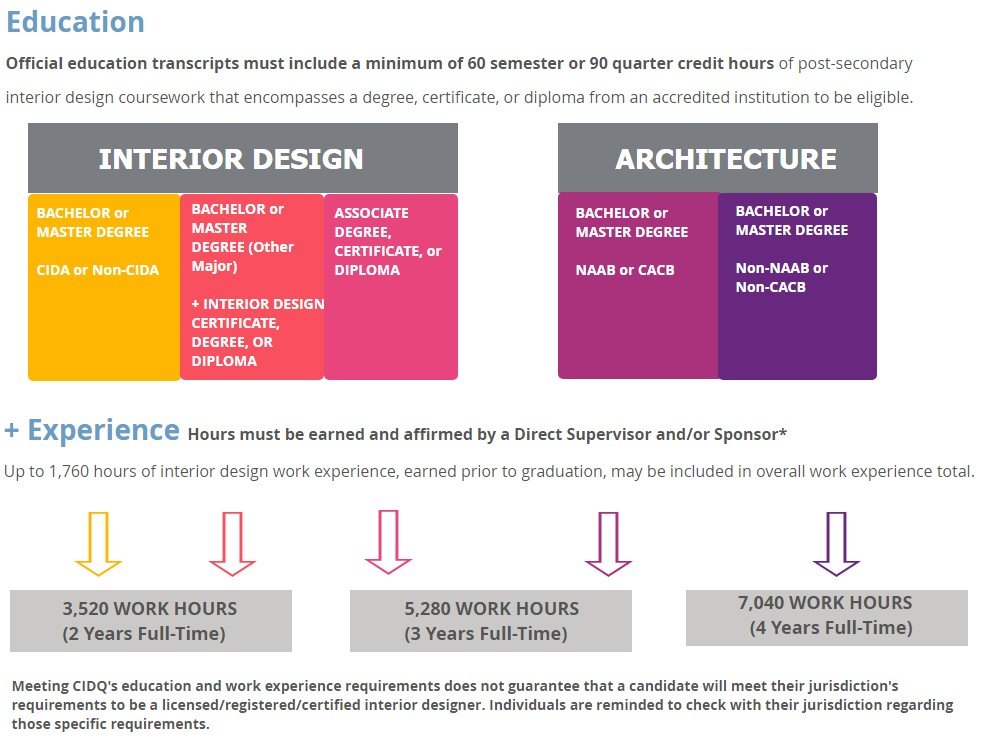
First things first—are you qualified to take the NCIDQ Exam? Visit the CIDQ website for full eligibility path requirements based your education and work experience. Work Experience will be changing for 2024!

Step 2: Create an Account
Before you can apply, you must create an account with CIDQ. Click here to register and then log in with instructions received in your email. If you have trouble, email inquiries@cidq.org for help.

Step 3: Applying for the Exam
There are two route options for applying for the NCIDQ Exam:
Option 1: Apply only for the IDFX. If you apply just for the IDFX now, you will need to submit another application for the IDPX and Practicum once you finish your work experience hours.
Application Fee for IDFX only: $95.00 (Second application for IDPX and Prac will be $145.00)
Option 2: Apply for all three sections.
Application Fee for all 3 Sections: $225.00
Applications are a one-time fee. Your application will also require you to submit an official transcript from your institution and your work experience (for IDPX & Practicum). Make sure you leave enough time for your sealed official transcripts to arrive, as any incomplete applications will not be considered after the deadline and you’ll have to wait until the next testing season.

Step 4: Registering and Scheduling Your Exam
Once your application has been approved, you will receive an email notifying you that you that can register for the exam and schedule a date at a Prometric Testing Center. Make sure to register early so you can lock in your preferred exam date!
From this point, you have 10 testing windows to pass all three sections of the NCIDQ exam. If you are only taking the IDFX, you must pass that exam within 4 exam windows. The second stage (IDPX and Practicum) must then be completed within 10 testing windows. Any scores older than 5 years are automatically voided. Registration fees occur each time you take an exam.
Exam Fees
IDFX: $295.00
IDPX: $355.00
PRAC: $460.00
Step 5: Studying
Make sure you leave yourself adequate time to study for this exam. I recommend at least 10 weeks and join a study group. Qpractice are ID Conquer are a great online resource to help you stay on schedule. Stay tuned for my upcoming blog post on my tips and tricks for studying for the NCIDQ Exam!


Join the more than 30,000 people around the world that have earned their NCIDQ Certification!
“Sarah has so much valuable knowledge and creativity to share as a designer. She will take the time to sit down and explain everything no matter what phase of the design process you are in. Sarah played a huge role in my success while studying for the NCIDQ. She was enthusiastic, motivating and genuinely cared. Working alongside Sarah and her team will make the entire process a positive and memorable experience!”

Benjamin Moore's Color of the Year 2020
Benjamin Moore just revealed it’s Color of the Year for 2020: First Light 2102-70. Not only does First Light bring an air of calm and relaxation, the complimenting color combinations are endless, making it such a versatile color choice. Benjamin Moore describes First Light as a “soft, rosy hue blooming with potential.” We have to agree! Here’s what we think of the new Color of the Year!
Benjamin Moore just revealed it’s Color of the Year for 2020: First Light 2102-70. Having studied The Psychology of Color, we know how important color is to our everyday lives when it comes to our living spaces. Not only does First Light bring an air of calm and relaxation, the complimenting color combinations are endless, making it such a versatile color choice. Benjamin Moore describes First Light as a “soft, rosy hue blooming with potential.” We have to agree! Here’s what we think of the new Color of the Year!

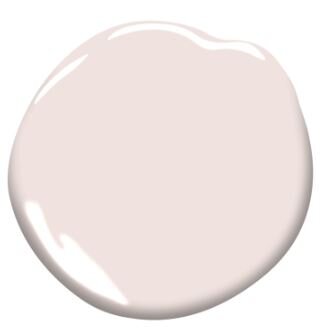
Why We Love It!
First Light is gender neutral enough to use in any room with the right compliments. The bright and airy color makes a room feel more open, especially when combined with lots of natural light. It’s uplifting, cheery, and serene; whether used for the entire space or a nice accent wall, First Light is definitely a great choice!
It pairs well with so many colors, but our favorite pairings are Blue Danube 2020-03 and Crystalline AF485.

Blue Danube

Crystalline
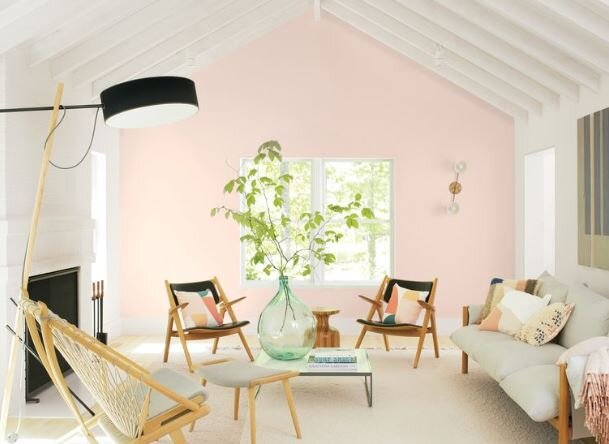
"First Light 2102-70 reflects a new definition of the home—a shift in mindset from the material to satisfying the core needs in life: community, comfort, security, self-expression, authenticity and ultimately, optimism.” -Andrea Magno, Benjamin Moore's Director of Color Marketing and Development

How to Use it
We would absolutely love to see First Light on a ceiling! It’s soft enough to not feel overwhelming but brings enough hue to create a nice accent. It is a great alternative for someone who tends to stay away from bold colors but still wants an alternative to white and beige shades.
This color also lends itself to the use of sage green accents, lots of natural plant life and succulents, and mixed materials. Mixing elements such as concrete or natural wood creates a great contrast with this color.
This versatile color would work well in a sunny kitchen, a comfortable living room, or a relaxing bedroom. So many options!
Need help finding the perfect paint palette for your space? Schedule a design consultation today!

Cabinetry Basics: Frames and Door Styles
When you decide it’s time for new kitchen cabinets, the decision can be both liberating and overwhelming. Your cabinetry defines the style of your kitchen and home. You use them daily, so it’s important to select quality cabinets that are aesthetically pleasing while still catering to your needs. Here are a few basic points to consider when you’re updating your kitchen cabinets.
When you decide it’s time for new kitchen cabinets, the decision can be both liberating and overwhelming. Your cabinetry defines the style of your kitchen and home. You use them daily, so it’s important to select quality cabinets that are aesthetically pleasing while still catering to your needs. The exterior of your cabinets is just as important as how you use them to store you kitchen appliances and dishes. Here are a few basic points to consider when you’re updating your kitchen cabinets.
Framing Choices
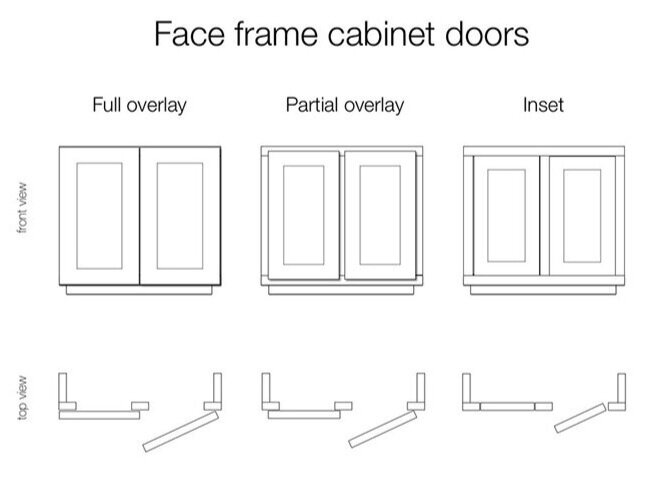
Full Overlay
Full overlay cabinets provide a more custom look. These cabinets can be framed or frame-less. Double door frame-less cabinets with full overlay doors do not have a vertical face frame stile between the two doors, which allows you to store larger items. You also gain an extra inch of space!
Partial Overlay
The most recognizable characteristic of a partial-overlay cabinet is the consistent 2” strip of the frame visible between the doors and drawers. The doors sit on top of the frame and have a small gap. Keep in mind your doors and drawer faces will be smaller this option. These are often the least expensive option.
Inset
Usually the most expensive option, inset doors and drawers are set into the cabinet frame and fit flush with the face of the cabinet when closed. Hardware is needed with inset cabinetry, since there is no space between doors and doors to pull. With this type of door, the hinges can either be concealed or exposed for an accent detail.

Red Oak

Cherry
Materials
There are so many combinations of wood finishes and styles that the possibilities are nearly endless. Cherry, Maple, Ash, Hickory, Mahogany, Birch, and Oak are popular wood choices and they all come in many different finishes.
These wood finishes are just a handful of wood and finishes available for custom cabinets from Top Cabinetry.

Mahogany

Walnut
Door Styles
Whether you prefer a traditional or modern style for your kitchen, the door style of your cabinets will speak the most about your taste. These are just a few examples of the styles available.
Slab or Shaker
Shaker and slab style doors create a clean and uncomplicated look that really show off the wood and finish. These are easy to maintain and perfect for a modern or contemporary kitchen.


Slab

Raised Panel

Reverse Raised Panel

Reverse Raised Ornate Panel
Raised or Reversed Raised Panels
For a more traditional design, paneled cabinet doors are a good choice. They create a warm and cozy atmosphere and can be more ornate in style.
Glass and Mullion
Glass cabinets are the perfect way to show off your beautiful glassware, china, or dishes. While they are most popular for upper cabinets, mullioned glass cabinets can be a beautiful accent to a lower cabinet on a kitchen island. Solid glass or ornate mullioned designs, these cabinet doors bring an air of sophistication and create an open, airy feeling to your kitchen.


Beveled Glass Door
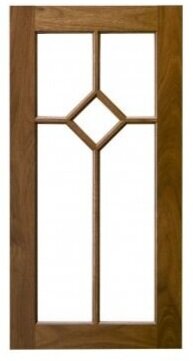
Mullioned Glass Door
Need help finding the perfect cabinets for your kitchen? Schedule a design consultation today!

Throw Pillows: It's All in the Details
It’s all in the details when it comes to creating a space that is uniquely yours. The easiest way to create a layered, detail-filled design is with your decorative throw pillows. Pillows can be simple, have a little detail, or be over-the-top ornate. Here’s everything you need to know about throw pillow details.
“The details are not the details. They make the design.” - Charles Eames
It’s all in the details when it comes to creating a space that is uniquely yours. The easiest way to create a layered, detail-filled design is with your decorative throw pillows. Pillows can be simple, have a little detail, or be over-the-top ornate. Here’s everything you need to know about throw pillow details.
The Basics
Knife Edge
Knife edge pillows are the simplest forms. There are no ornate details around the edges, just the fabric sewn together, creating a sharp corner.These pillows create a clean, contemporary look that works with any decor.


contrast welt - romo
Welting
What’s a welt? A welt is simply a thin cord covered in fabric that creates a decorative ridge around the pillow. Welting provides a tailored look and gives a outline to the pillow.
Self Welting uses the same fabric as the pillow.
Contrast Welts use a separate fabric to create a contrasting look.

jayson home - Contrast Welt
Flanges
What’s a flange? A flange is a piece of fabric that extends beyond the seam of the pillow, giving it a soft, feminine detail.
There are a number of possibilities when it comes to flanges. They can be self or contrasting, split, or even ruffled.
A split flange creates two separate pieces of fabric to extend beyond the seam of the pillow, creating more volume, and can even be done in two different fabrics!
A butterfly flange is a flange that pleats at the corner. This is also called a Turkish corner.
A ruffle flange creates a lovely ruching.


Embellishing Details
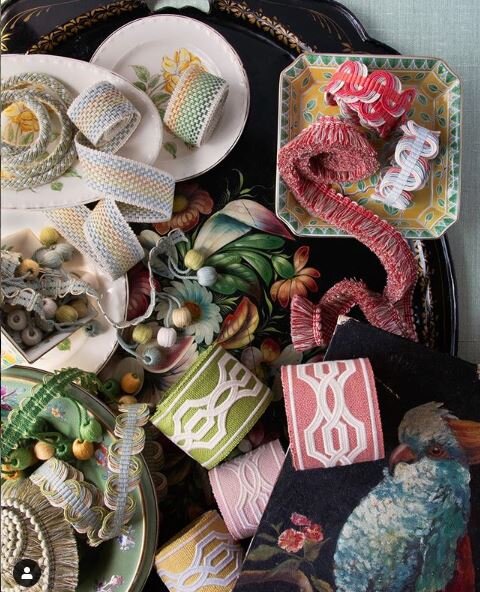
I love banding, trims, gimp, and brush fringe! These little details can take your room from basic to layered and dynamic!
One of my favorite designer resources to shop for these details is Samuel and Sons Passementerie.
Passementerie, simply put, is decorative trimmings, braids, and fringes used on home and fashion accessories.
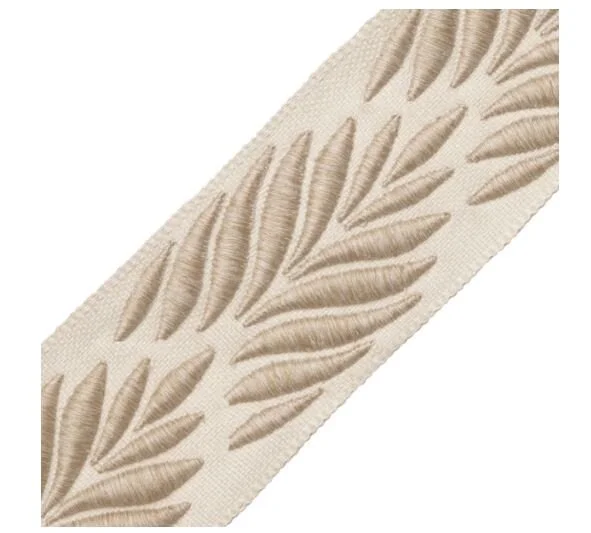
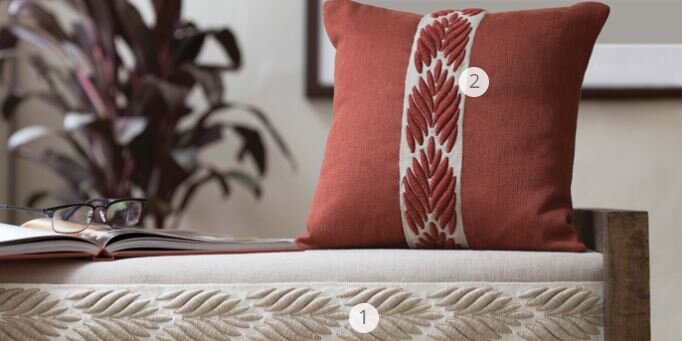
Tape
Tape is a decorative strip of material that is sewn onto the pillow. Tape can be applied on the face, edges, bottoms, or even on the flange of a pillow. The possibilities are endless!


Fringes
What are fringes?
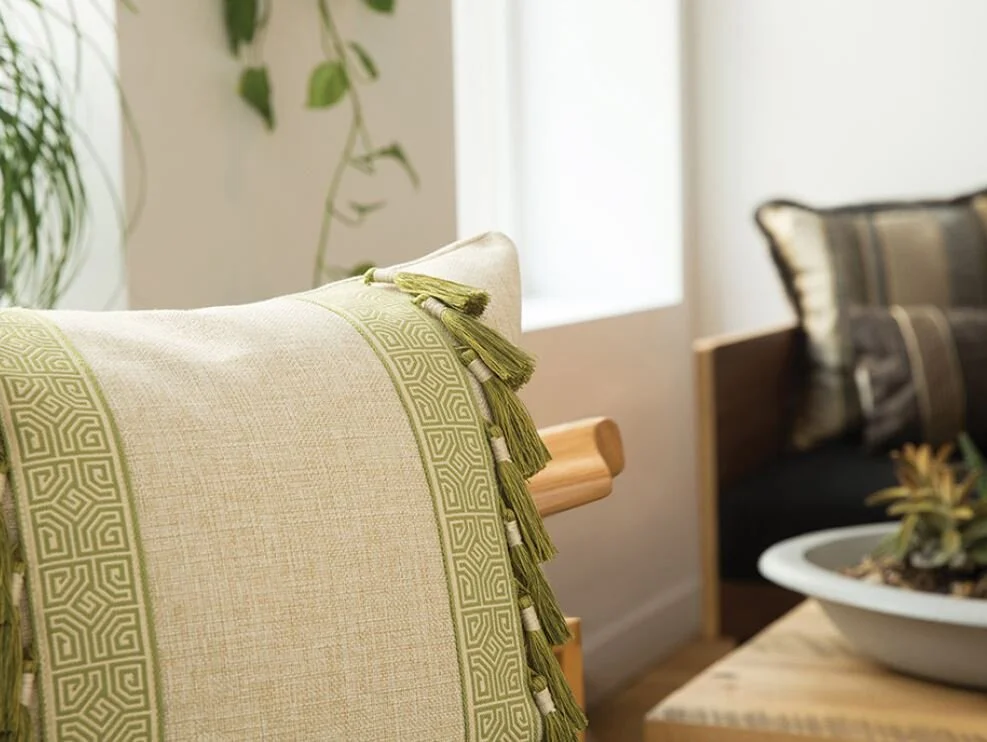
Fringes are trims applied to a pillow to create ornate details. They can be small, thick, long, fluffy, looped or tasseled; so many options!
Brush fringe is a technique that applies simple strands of fabric that hang off the pillow.
Tasseled fringe is trim that creates individual tassels that are applied to the pillow.
Pom pom fringe is trim with fabric balls, or pom poms, that hang off the pillow.
Our Favorite Embellishing Details Right Now


Need help finding the perfect throw pillows for your space? Schedule a design consultation today!

How to Choose Your Counter or Bar Stools
There are thousands of choices when considering counter or bar stools. Choosing the perfect one is not only about the aesthetic; it is so important to find the correct height and quantity when purchasing new stools. No one wants to eat with their food level with their face or have to lean over because they’re legs don’t fit. Here are a few guidelines when selecting your new counter or bar stools.
There are thousands of choices when considering counter or bar stools. Choosing the perfect one is not only about the aesthetic; it is so important to find the correct height and quantity when purchasing new stools. No one wants to eat with their food level with their face or have to lean over because they’re legs don’t fit. Here are a few guidelines when selecting your new counter or bar stools.
What’s the Difference Between a Counter and Bar Stool?
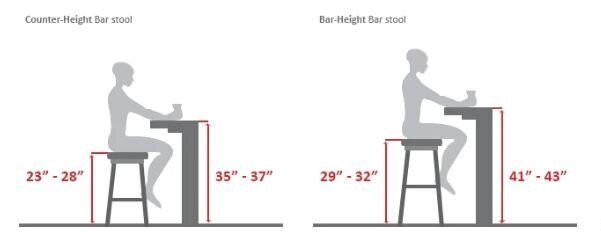
A standard counter stool measures between 23 and 28” from floor to seat, while a bar stool is taller, measuring between 29 and 32” from floor to seat.
HAYNEEDLE

How Do I Know if I Need Counter or Bar Stools?
In order to determine whether you need a counter or bar stool, make sure to measure from the floor to the underside of you counter or table. You need to allow 10-12” for leg room, so be sure to subtract this from your surface’s height.
Pro Tip: Always measure to the underside of the surface, not the top of the surface. Some counter tops are thicker than others or have aprons that can take away from your leg space.
For example: If your surface is 36”H to the top and 34.75” to the underside, subtract 10” from 34.75” and your counter stool should sit roughly at 24.75”.

How Many Do I Need?
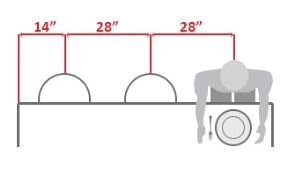
It may feel like you can eyeball an estimate for how many seats you need, but be sure to carefully measure to ensure that you are not overcrowding or leaving your space too bare. As a general rule, there should be around 26”-28” between the centers of each seat. If your table or counter is up against a wall or outside edge, be sure to include at least 14” between the last seat. No one wants to bump their elbow into the wall each time they pick up their fork!
HAYNEEDLE

What Style Should I choose?
This depends on a few things, including your personal tastes and the size of your space. If you’re working with a smaller eat-in kitchen with a breakfast bar, you may want to choose a narrower and backless stool to avoid weighing down the space. Stools with larger seats and backs can be cozier and can fill a larger space nicely, but if too big, they can make the room feel crowded. In this instance, consider choosing something of smaller proportion that is airy and visually light weight with slim legs. If you plan to sit in your counter or bar stools for long periods of time, consider an upholstered stool that will add more cushion and comfort.
Pro tip: Think about clean ability when selecting materials for your stools. Acrylic is a great option as it is easy wipe able. Leather or faux leather can also make for easy clean up. Don’t be afraid of white fabric, as long as it’s bleach cleanable, like a Perennials or Sunbrella fabric! Love the look of the stool, but the material is not practical? Have the stools reupholstered with your favorite bleach cleanable fabric or easy clean leather!

My Top 3 Favorite Stools Right Now


Need help finding the perfect stool for your space? Schedule a design consultation today!

Designer Tips for Styling Your Coffee Table
Want to get creative with your coffee table decor? Play around with these different ideas and styles to make your coffee table pop! Last week, we talked about some of my favorite coffee tables right now. This week, we explore a few rules of thumb for styling your coffee table to perfection!
Want to get creative with your coffee table decor? Play around with these different ideas and styles to make your coffee table pop! Last week, we talked about some of my favorite coffee tables right now. This week, we explore a few rules of thumb for styling your coffee table to perfection!
It’s All About Proportion
Choose items to style with that are proportional to the size of the coffee table and to each other. Make sure you’re are varying the sizes of the pieces you choose. Too many “heavy” items will cause an imbalance and visually weigh down the table too much. Likewise an assortment of too many small accessories can feel busy and make the table feel cluttered. Instead, balance visually with an arrangement of a heavier element like a vase of flowers, with a stack of thin books, and some small accent pieces for conversation. Play around with materials! Acrylic is a great option, because it can occupy space on the table, but because it’s translucent it won’t add additional visual weight to your presentation.

Follow The Rule of Three
The rule of three simply states that things arranged in odd numbers are visually more appealing and memorable to the human eye than even numbered groupings. This rule does not only apply to three, but works nicely as five and seven as well. An even grouping of four or six can look staged, while an odd numbered group looks effortless and intentional.
Choose three items (or groups of items) to create the perfect balance. Good examples are stacks of books, a decorative bowl or small sculpture, and a vase of fresh flowers. When choosing books, the title and content is not all that’s important. Consider the color, size, font, spine, and overall aesthetic of the cover as well. The books become part of your homes decor.
Your choice of flowers can be a fun way to bring in a subtle touch of seasonal decorating. Play with color, texture, height and volume. Knickknacks and metallic accents, such as coasters, are a great way to introduce a variety of textures and layer your look.

I Love Decorative Trays
A tray is a fantastic way to layer smaller accessories in an eye-catching way. To mix up the geometry, try selecting a circular tray for a square table, or vise versa. A painted tray is an opportunity for an accent color, like this Spectrum Tray from Jayson Home. Consider a different element, such as metallic, bamboo, or glass to vary the textures and materials. The possibilities are endless!

Get The Right Height
Select a high, medium, and low pieces. A stack of books is a great way to add height or to boost up smaller items. If you have tall and narrow pieces to showcase, you won’t want to add the height of fresh flowers into the mix. Try a succulent or low potted cactus to add more texture and color. Have fun with your selections!

Things To Avoid
Don’t place items on the corner and leave the middle empty.
Don’t go too bare. Fill the table, but don’t overwhelm it.
Avoid lining up your objects. They should fit together nicely like puzzle pieces.
Don’t use items that are so tall that your guests can not see each other across the room.
Don’t design from one view point. Make sure it looks good from all angles.
Need help finding the perfect style for your space? Schedule a design consultation today!

My Top 5 Favorite Coffee Tables Right Now
Ah, the coffee table. A jack-of-all-trades. It holds our knickknacks, our takeout dinners, occasionally our feet, and - of course - our coffee. It is a vital piece of furniture that can change the whole atmosphere of the room. Here are the top 5 coffee tables that I’m crushing on right now!
Ah, the coffee table. A jack-of-all-trades. It holds our knickknacks, our takeout dinners, occasionally our feet, and - of course - our coffee. It is a vital piece of furniture that can change the whole atmosphere of the room and ground the space. Here are the top 5 coffee tables that I’m crushing on right now!
Raj 1 Coffee Tables from Casa Spazio
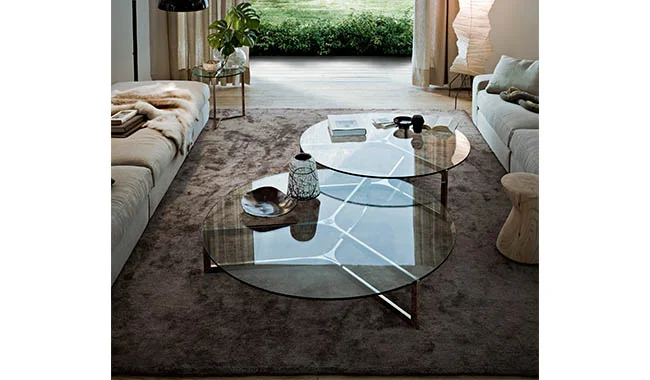
I am all about the metal Y bass and the translucent glass tops. Casa Spazio offers several different heights to create nesting tables, which are perfect to fill in a large living room. They are also a great option since they don't add visual weight. This pair are perfect!
Teak Root Table from Jayson Home
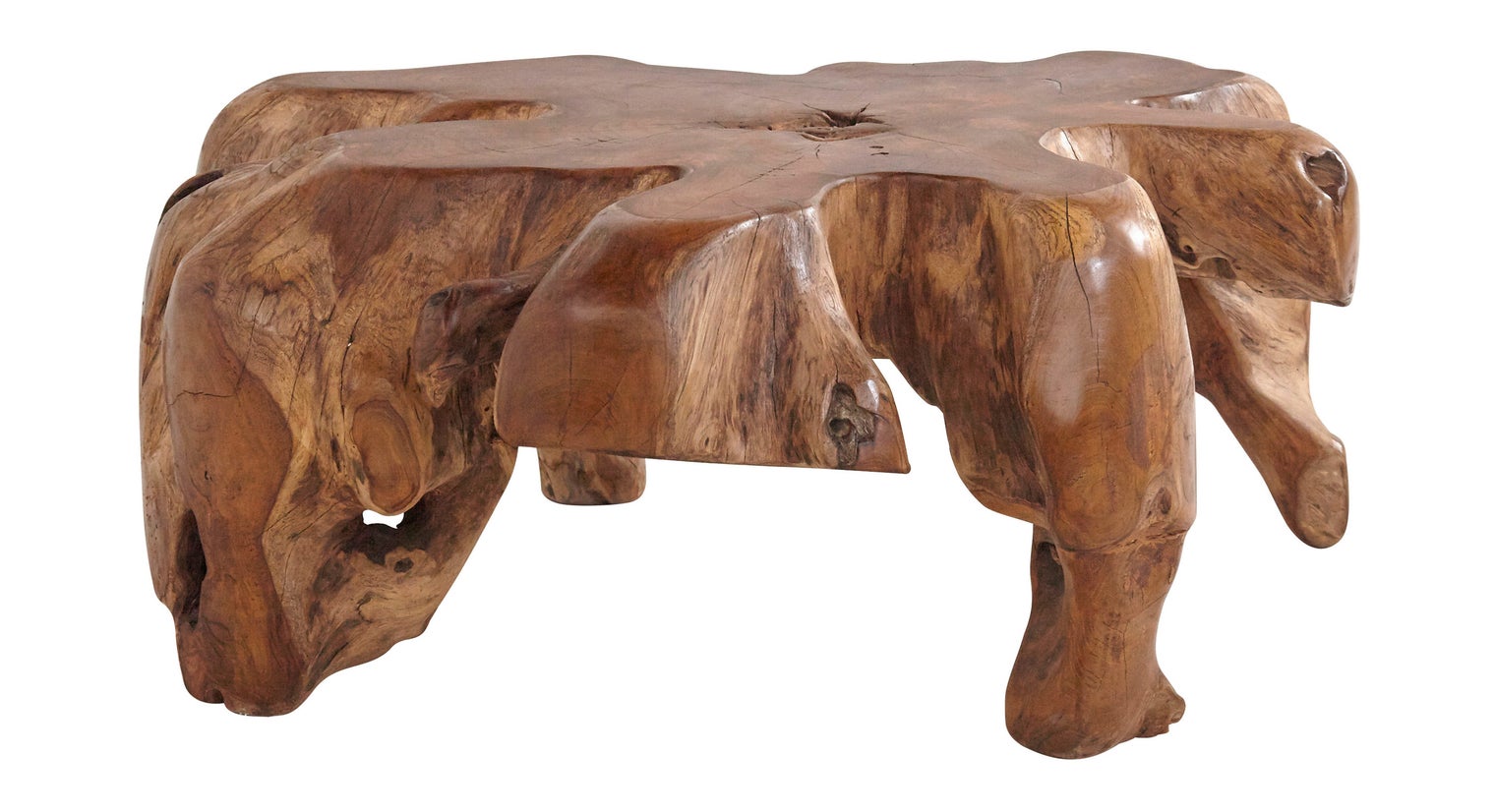
I love the organic and raw composition of this table! It’s made of sustainable teak wood harvested in Indonesia. The top of the table is sanded and polished, while the sides are unfinished, producing a unique, statement making coffee table.
Drum Storage Coffee Table from West Elm

Love the hidden storage! The antique brass and bronze finish is just gorgeous. Mixing metals is hot! The 32” diameter is a great size for most living rooms.
Allure Attraction Cocktail Table from Theodore Alexander

Stunning! Marble and channeled upholstered sides makes a dramatic contrast of hard and soft elements. With an almost 48" diameter, this table is just asking to be styled with brass metallic accents and a nice pile of books!
Vestale Cocktail Table from Roche Bobois
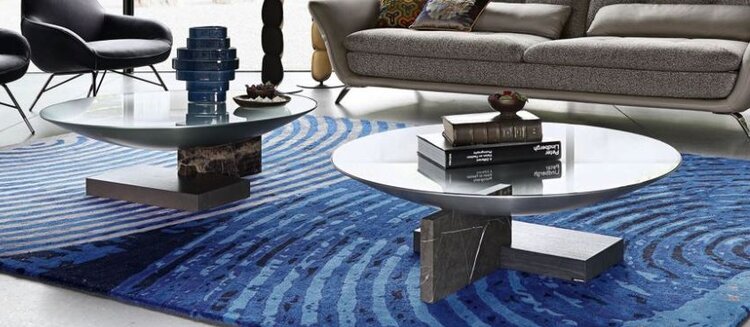
Love the forms and shapes of this elegant table! It has the perfect mixture of elements, from the ash bases to the finished aluminum cup.
Need help finding the perfect coffee table for your space? Schedule a design consultation today!

ASID Illinois' Rising Star, 2019: Sarah Schwuchow
Congratulations to our Owner and Principal Interior Designer, Sarah Schwuchow, who was named as the American Society of Interior Designers Illinois Chapter’s Rising Star for 2019!

Congratulations to our Owner and Principal Interior Designer, Sarah Schwuchow, who was named as the American Society of Interior Designers Illinois Chapter’s Rising Star for 2019!
The ASID Rising Star Award recognizes an emerging professional who has shown dedication to ASID, the interior design industry, and volunteer efforts & contributions to the design community.
Sarah joined ASID as a student member while attending the Illinois Institute of Art, Chicago in 2011 and was elected Student Chapter President the following year. Under her energetic leadership, the Student Chapter earned two nationally recognized awards: ASID Student Chapter of the Year, 2012 and ASID Community Service and Fundraising Project of the Year, 2012.
Sarah passed the NCIDQ exam in 2018 and is a Registered Interior Designer in Illinois. Later that year, she founded a committee through ASID Illinois to provide educational programming and study skills to design professionals taking the interior design certification exam (NCIDQ). She has enjoyed serving as a mentor to many design students and other emerging professionals. She also became a CIDQ Ambassador in January of this year.
Sarah will begin serving as the ASID Illinois Director of Communications this October, overseeing all communication functions of the Illinois Chapter. She is dedicated to the mission and values of ASID and firmly believes that design impacts lives and is passionate about educating the general public on the profession of Interior Design.


Your Guide to Choosing the Perfect Rug Size
Area rugs are a great way to tie a room together. They create a warm and welcoming environment. However, choosing a rug that is too big or too small for your space can interrupt the whole vibe of the room. The right sized area rug is essential to the cohesive feel of your space. Here are some guidelines when choosing the right size for your rugs.

Area rugs are a great way to tie a room together. They create a warm and welcoming environment. However, choosing a rug that is too big or too small for your space can interrupt the whole vibe of the room. The right sized area rug is essential to the cohesive feel of your space.
Most standard size rugs are:
3’ x 5’ 8’ x 10’
4’ x 6’ 9’ x 12’
5’ x 8’ 10’ x 14’
6’ x 9’ 12’ x 15’
Consult with your Interior Designer if you think your space needs a customized size and shape. Here are a few tips when choosing the right size for your next rug.
Living Rooms
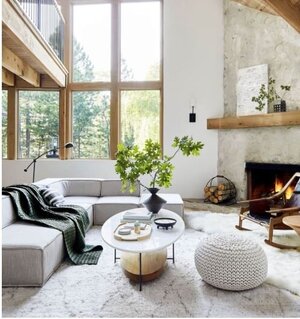
The first rule of thumb is cover the floor space that you have. Big room? Big rug! Long room? Long rug! You’ll also want to take into consideration where your furniture will be placed. For larger rooms with a lot of furniture, it’s best to be able to comfortably fit all your furniture on the rug. The standard sizes for larger area rugs is 9’ x 12’ or 10’ x 14’. For smaller living rooms that require the furniture to be against a wall, it’s best to choose a size around 6’ x 9’ or 8’ x 10’. You’ll want to place the front two legs of your furniture pieces on the rug.

Dining Room
For those who choose to use an area rug in their dining room, you need it to be big enough to fit the table and chairs. For safety reasons, the rug should extend at least 24” past all edges of the table to avoid chairs getting caught on the edge of the rug.
Standard sizes for dining room rugs are 8’ x 10’ or 9’ x 12’, but you can always measure your dining room table and add 2 feet to all sides for a good starting place.

Bedrooms
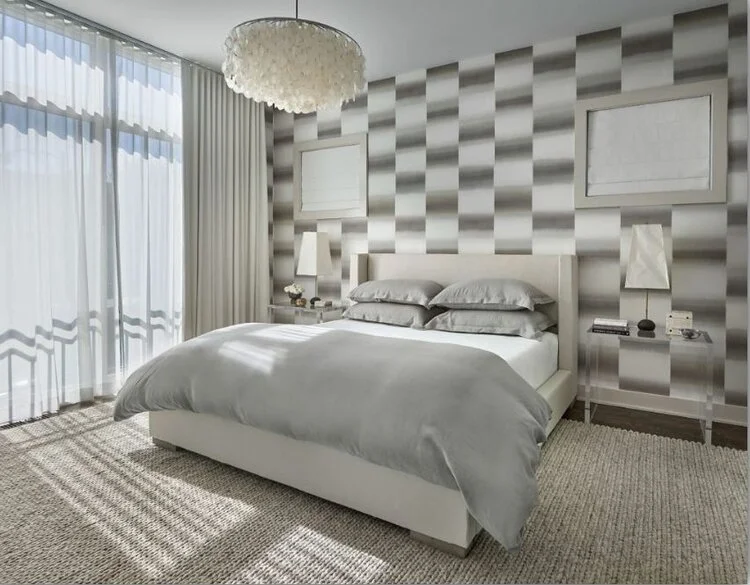
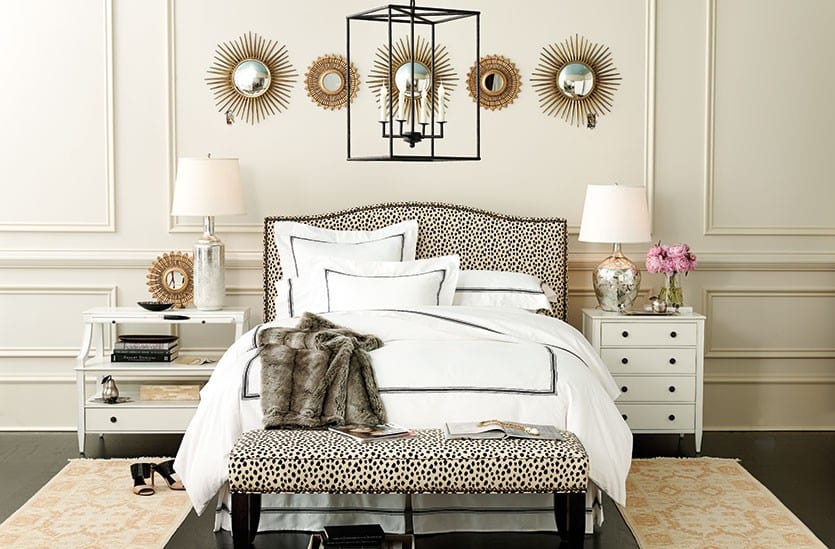
There are a few options for rug choices and sizes when it comes to your bedroom. If you’d like a larger rug under the bed, you’ll want to make sure that it extends on either side of the bed. The rug should also extend past the foot of the bed. A standard size rug for a queen bed is 8’ x 10’ and a king bed requires at least 9’ x 12’.
If you’re looking for a more minimalist option, two runners on either side of the bed (or even just the foot!) can bring a higher level of comfort to your bedroom, even in an already carpeted space. You’ll want to shop for rugs sizes of 2’ 6” x 8’ or 3’ x 5’.
Kitchens
Whether it’s a smaller rug in front of the sink or a runner between an island and your cabinets, a rug can bring texture and color to your kitchen, complimenting your wall and cabinet colors. For a kitchen with limited space, like a galley kitchen, a runner that runs the length of the space is an excellent way to add a little warmth and comfort underfoot. Bonus: vintage runners in the kitchen are an awesome design trend right now!
Some standard sizes for a kitchen runner are 2’ 6” x 8’ or 3 ‘ 5’.
For open concept or country kitchens, a smaller rug in front of sink where there is generally a lot of foot traffic is a practical way of showcasing a rug. The most standard size is 2’ x 3’. Want to mix it up? Look for a half-round rug instead of the usual rectangle.
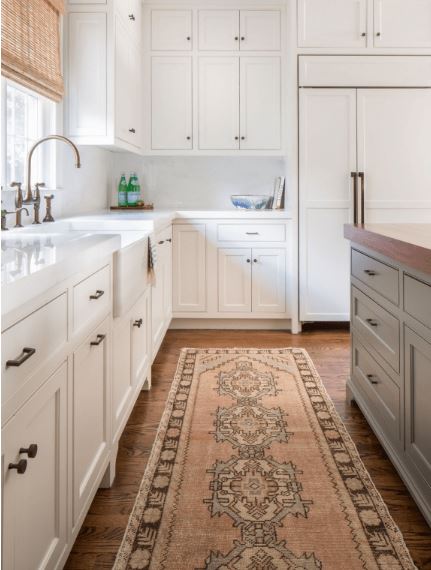
Now that you’ve found your perfect rug, don’t forget to get a rug pad!
Check out our recent post: 5 Reasons You Need a Rug Pad.
Need help finding the perfect area rug for your space?Schedule a design consultation today!

A Night of Color at Artists Frame Service: Our RNDD Gallery Walk Vignette
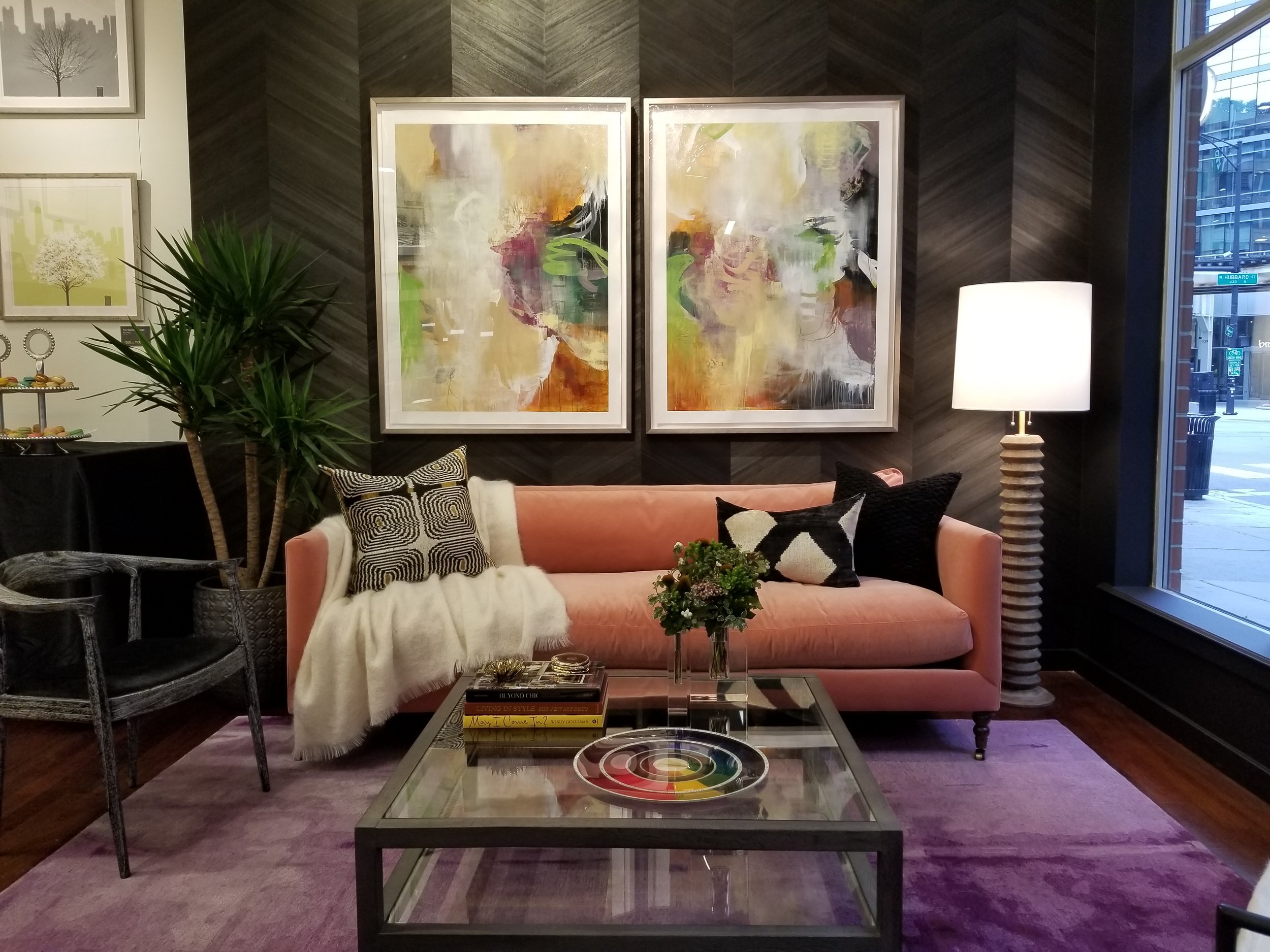
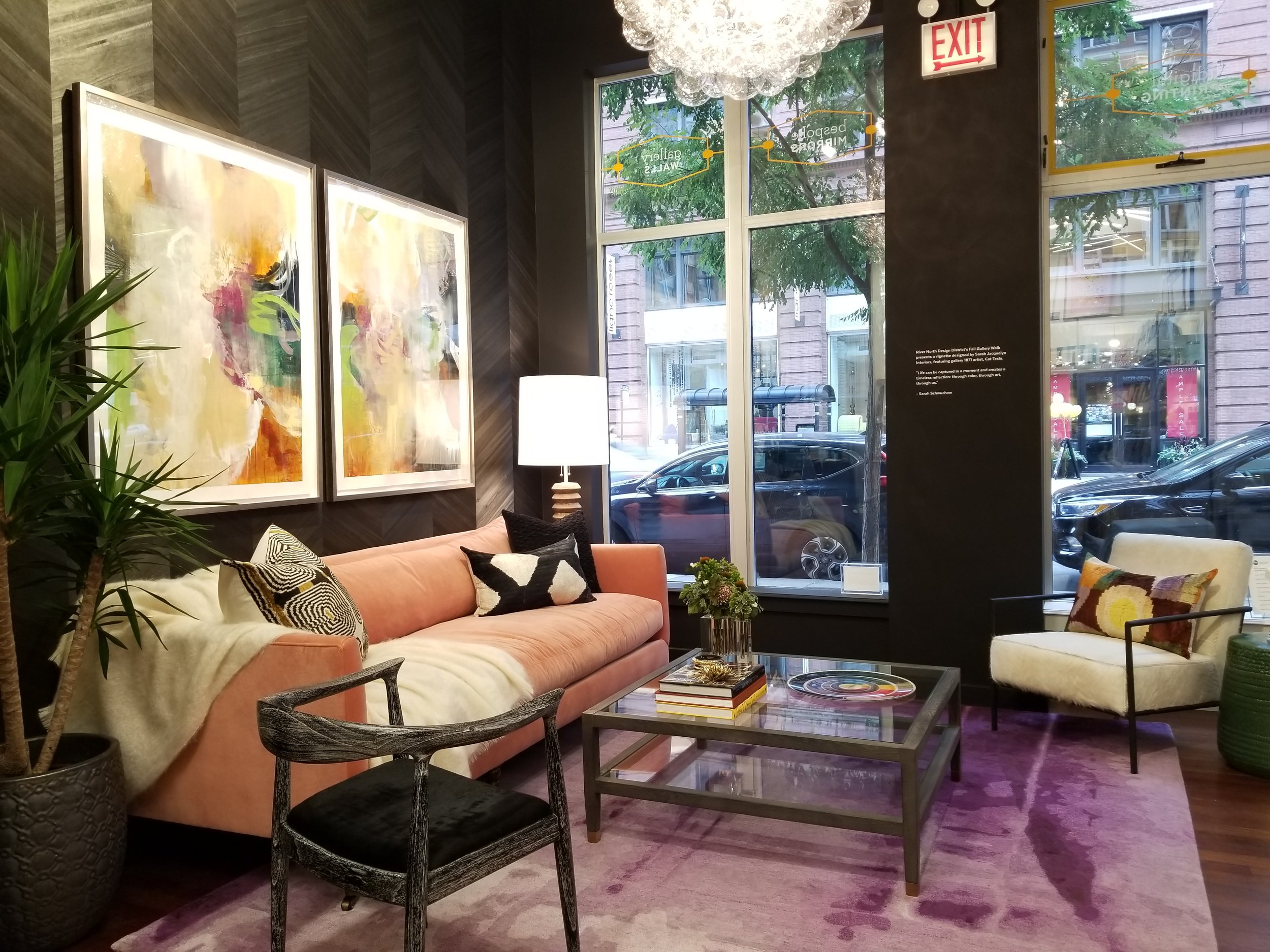
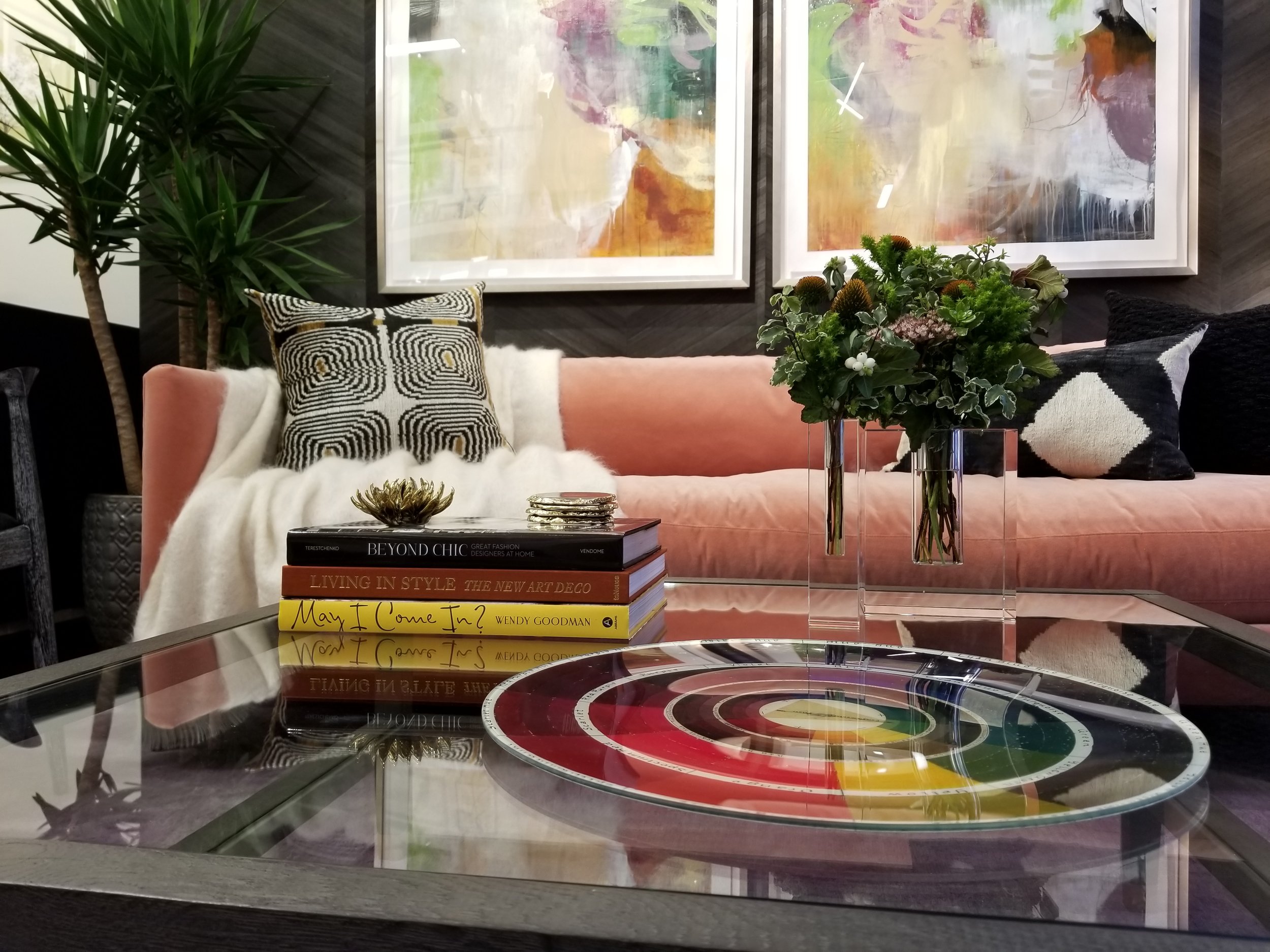
We had such an exciting night this past Friday at the River North Design District’s 5th Annual Fall Gallery Walk! Our vignette was featured at Artists Frame Service and showcased the ethereal art of gallery 1871’s Cat Tesla. We captured our true colors with aura photographer Revealing Soul, were captivated by color-changing cocktails, and enjoyed fabulous company and great conversation.
We had such an exciting night this past Friday at the River North Design District’s 5th Annual Fall Gallery Walk! Our vignette was featured at Artists Frame Service and showcased the ethereal art of gallery 1871’s Cat Tesla. We captured our true colors with aura photographer Revealing Soul, were captivated by color-changing cocktails, and enjoyed fabulous company and great conversation.
The walk featured 33 showrooms exhibiting designer vignettes from Chicago’s top designers, showcasing living settings highlighting artwork created by some of the brightest stars in the art world today.
Here are some highlights from our opening night on Friday!

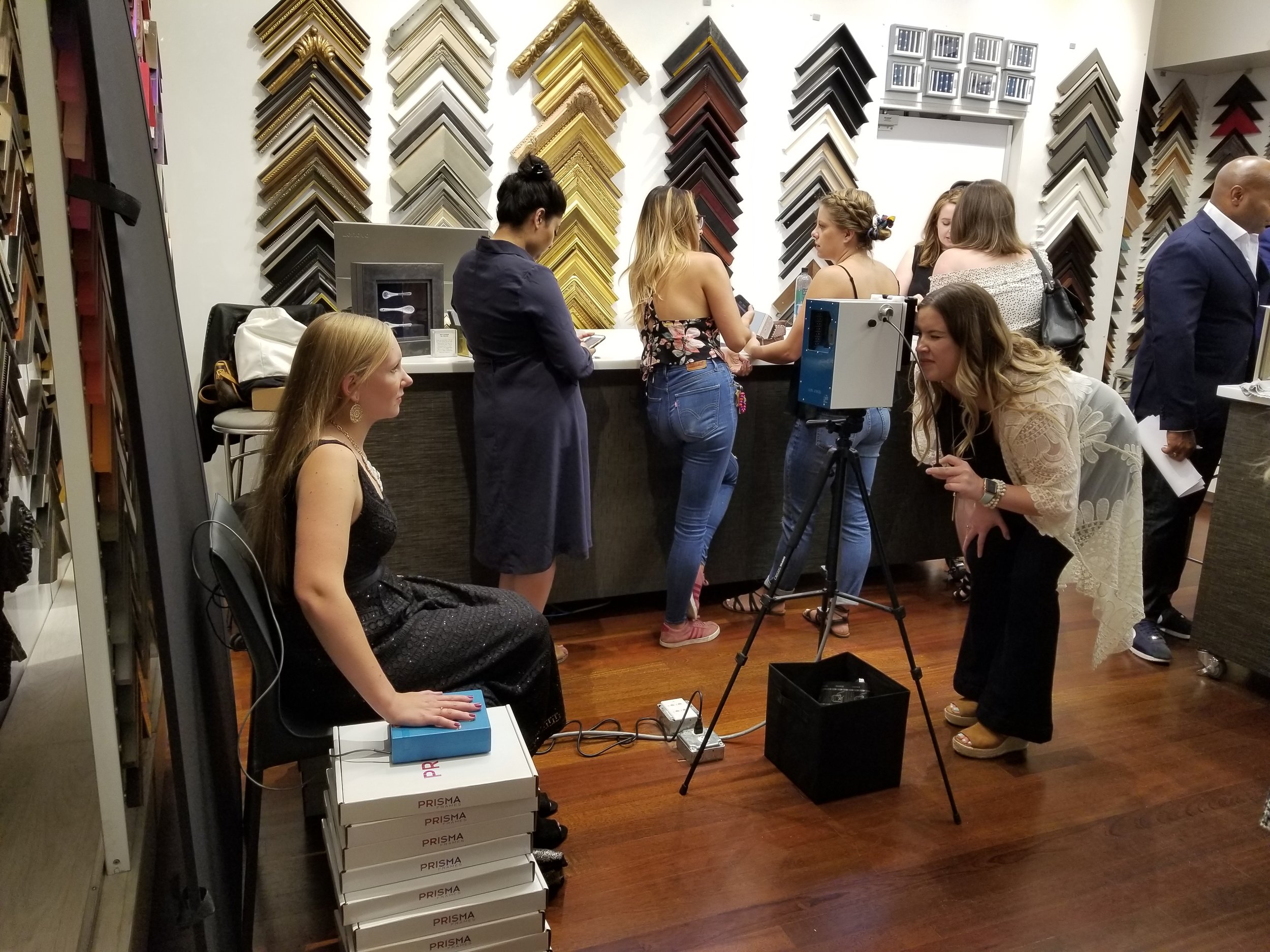



Our Color Changing Cocktail - The Chroma!
These were so fun to watch and they were also super delicious!
Meet the artist, Cat Tesla of gallery 1871
“My work includes both ethereal landscapes and abstract designs. The subjects I choose to paint are organic, either originating from Mother Nature, or inspired by her. I love building layers using painting and drawing, scraping back, then adding more, pooling juicy paint, and pouring glossy translucent glazes over the surface. My artwork provides the viewer with a bold graphic element from a distance, but up close they're rewarded with rich organic details and texture.”
Cat Tesla is an international artist of 22 years. After a high-stress profession working in human genetics, Cat turned to the natural world, meditation, and yoga. She began studying art in the evenings and went on to obtain a degree in graphic design, followed by studies/residencies with Nicholas Wilton and Steve Aimone. She was “inspired to put nature to canvas - the shapes, colors, and feelings.”
Cat is a resident artist of gallery 1871 of Chicago Art Source. Her Timeless series pieces featured in our vignette are available for purchase.


Aura Photography by Revealing Soul
Aura Photography is the art of capturing an individual’s aura through photograph in a beautiful array of colors. Revealing Soul was an amazing addition to the evening, taking plenty of photographs and offering free readings!
According to my aura’s colors, I am career oriented and currently experiencing an abundance of growth; I am going through a transformation of personal balance. I’d call that a great reading!

Missed us last Friday? There’s still time to see our vignette!
The Fall Gallery Walk vignettes will be up in each showroom through October 7.
Make sure you stop by Artists Frame Service on Wells street and take a look!

We could not have had such a successful opening night without the help of many hard working individuals! We owe a huge “thank you” to all our contributors!


The Psychology of Color in Interior Design
I love using color as a communication tool in my interior design projects. In order to do that effectively, it’s important to understand how colors behave and how they can influence our mood. Color psychology suggests that some colors may increase anxiety, while others can boost your energy level. Your home should be your sanctuary, so it’s important to understand the emotional impact a color will have in your home.
I love using color as a communication tool in my interior design projects. In order to do that effectively, it’s important to understand how colors behave and how they can influence our mood. Colors evoke emotional responses in everyone. The psychology of color is used around us every day and is an important tool for transmitting information. A red stop sign prompts you to stop and look around; a brightly colored playground evokes feelings of joy and youthfulness.
The colors you choose for your walls and furniture have a big impact on your mood and emotions too. Color psychology suggests that some colors may increase anxiety, while others can boost your energy level. Your home should be your sanctuary, so it’s important to understand the emotional impact a color will have in your home.
Here are some things to take into consideration when choosing a color palette.

“Color is a power which directly influences the soul.”
-Wassily Kandinksy
Red
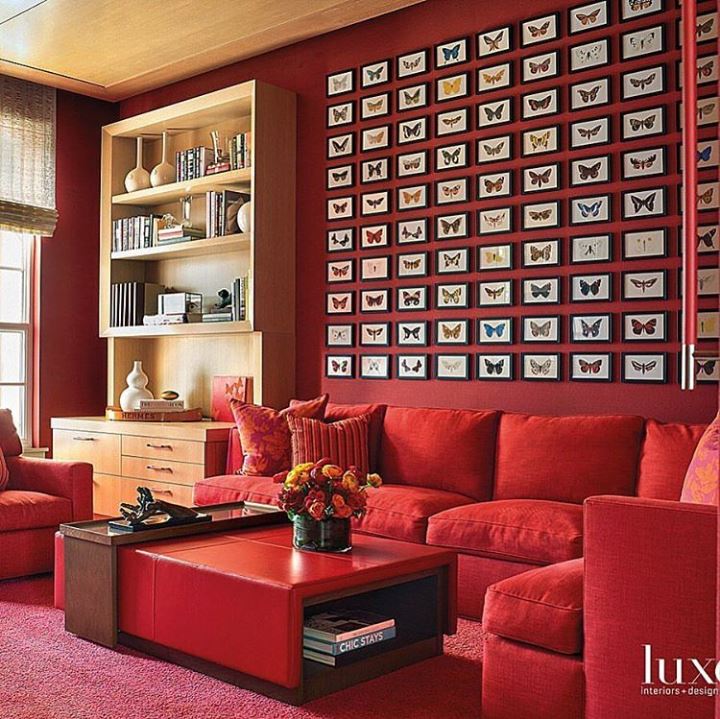
Red is the color of passion and drama. It attracts the most attention and is often associated with strong emotions such as love and anger. Red is used universally to communicate danger or power. While it is vibrant and exciting, it also inspires feelings of lust with a strong link to sexuality.
Color psychologists have proven that red can increase blood pressure and stimulates the adrenal glands. In color therapy, red is often used to help dispel negative thoughts and release anger.
Red | Emotions
Excitement
Energy
Passion
Attention
Orange
Orange is the color of optimism and is socially inviting. This color is for the extrovert, exuding energy and motivation. The combination of yellow and red makes orange, conveying warmth and excitement and typically appeals to younger people. Orange is often used as a natural antidepressant in color therapy and can relieve feelings of self-pity. It is also thought to help strengthen the immune system and aid in digestion.
Orange | Emotions
Optimism
Independence
Adventurous
Creativity
Youthfulness

Yellow
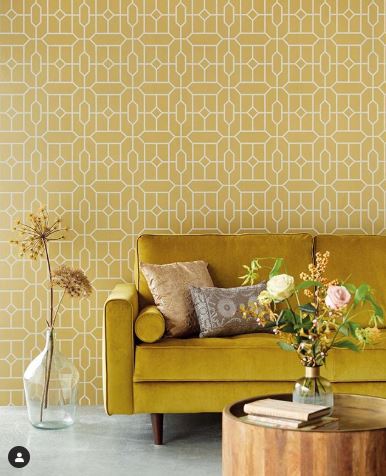
Yellow is full of energy and happiness. It conveys youthful optimism and freshness. The color of sunshine, it is uplifting and illuminating and often associated with success and confidence. Yellow stimulates the left side of the brain, which aids in clear thinking and quick decision making.
In color therapy, yellow is used to create uplifting feelings. It stimulates the brain and can make you more alert and energetic. Yellow also builds self confidence, yet some may find that it can also trigger feelings of fear and anxiety.
Yellow | Emotions
Enthusiasm
Opportunity
Spontaneity
Happiness
Positive
Green

Found in all of nature, green is the color of growth and health, expressing renewal and life. Green has a strong association as a refreshing and peaceful color. It evokes feelings of abundance while providing a restful and secure feeling.
Green is thought to be good for your heart and also helps you breathe slower and deeper. It creates feelings of comfort and relaxation as we are reminded of nature. However, olive greens have been known to convey thoughts of decay and death and may be detrimental to psychological and emotional health.
Green | Emotions
Safety
Harmony
Stability
Reliability
Balance
Blue
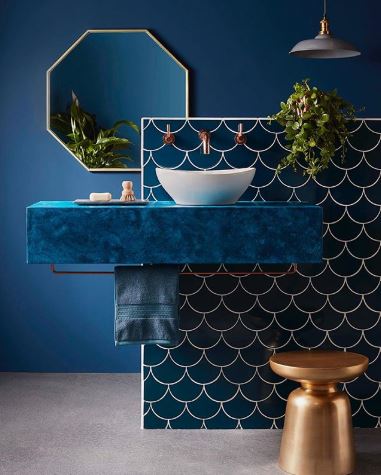
The hue of the sea and sky, blue communicates a tranquil emotion that induces peace and serenity. This calming color instills confidence and inspires feelings of loyalty, integrity and responsibility. A cooler blue is conservative, responsible, and can instill feelings of security.
Blues are often used to reduce stress, increase relaxation and has been proven to lower blood pressure. Blue inspires mental control and clarity. Though it is calming, too much blue can increase feelings of depression.
Blue | Emotions
Trustworthy
Responsibility
Honesty
Calming
Inner security

Violet
Violet is often associated with spirituality and royalty. The energy of red combined with the calm of blue, it is a color that inspires intrinsic qualities and reflection. It is the color of the introvert. It is often used to encourage creativity and communicate luxury.
Violet has an antiseptic effect. In color therapy, it is used to treat mental and nervous disorders, as it can help to balance the mind and transform obsessions and fears. It also has a cleansing effect in regards to emotional disturbances.
Violet | Emotions
Imagination
Mystery
Sensitivity
Compassion

Need help creating a color palette for your home? Schedule a design consultation today!

Renew Your Illinois Interior Design License - Expires August 31st!
Registered Interior Designers in Illinois (RID): You must renew your active license before it expires on August 31, 2019. Once renewed, licenses are good for two years and always expire on odd years. Read the step by step instructions here on how to renew your Interior Design License today.

Registered Interior Designers in Illinois (RID): You must renew your active license before it expires on August 31, 2019. The Illinois Department of Financial and Professional Regulation (IDFPR) is moving away from sending paper based renewal notifications and will only be sending electronic notifications.
Make sure your renewal notice email does not get lost in your inbox! Search for an email from FPR.Notice@illinois.gov with the subject line as “Interior Designer Renewal Notice”. This email contains your license number and pin number that you will need to renew your license.
To check if your license is active, click the link below, select INTERIOR DESIGN and enter your name.
https://ilesonline.idfpr.illinois.gov/DFPR/Lookup/LicenseLookup.aspx
All Interior Design licenses will expire on August 31, 2019 if not renewed! Once renewed, licenses are good for two years and always expire on odd years.
If you have any questions or concerns about the renewal process, contact the Department at 1 (800) 560-6420 or send a message here.
8 Steps to Renew Your License Today

1. Visit the IDFPR website http://www.idfpr.com/Renewals/defaultSSL.asp
2. Select the BLUE box “Professions Currently in Renewal”
3. Click “Interior Designer”
4. Click the GREEN box “Credit Card - Internet Renewal”
5. Scroll down and click “Continue”
6. You will need to enter your License Number and Pin Number. You can find this in the email that was sent to you from FPR.Notice@illinois.gov with the subject “Interior Designer Renewal Notice”. If you can’t find your pin number, you can enter your social security number or date of birth.
7. Submit your payment. The Interior Design Renewal fee is $60.00, plus applicable processing fees, and is good for 2 years. Payments are non-refundable.
8. You will receive a confirmation email once your payment has been submitted. It generally takes 2 business days for the renewal processing. Once updated, print and save a copy of your renewed license, as the IDFPR is no longer mailing paper licenses.

6 Steps to Selecting the Perfect Ceiling Fan
Ceiling fans come in a variety of sizes, heights, styles, and colors. Choosing the right size fan for your space ensures it will provide efficient air flow. Here are 6 steps to selecting the perfect ceiling fans for your home!
Ceiling fans come in a variety of sizes, heights, styles, and colors. Choosing the right size fan for your space ensures it will provide efficient air flow. Though ceiling fans are not usually considered the focal point of a room, the right one can tie a room together while providing maximum comfort. Here are 6 steps to selecting the perfect ceiling fans for your home!
1. Select the Right Size
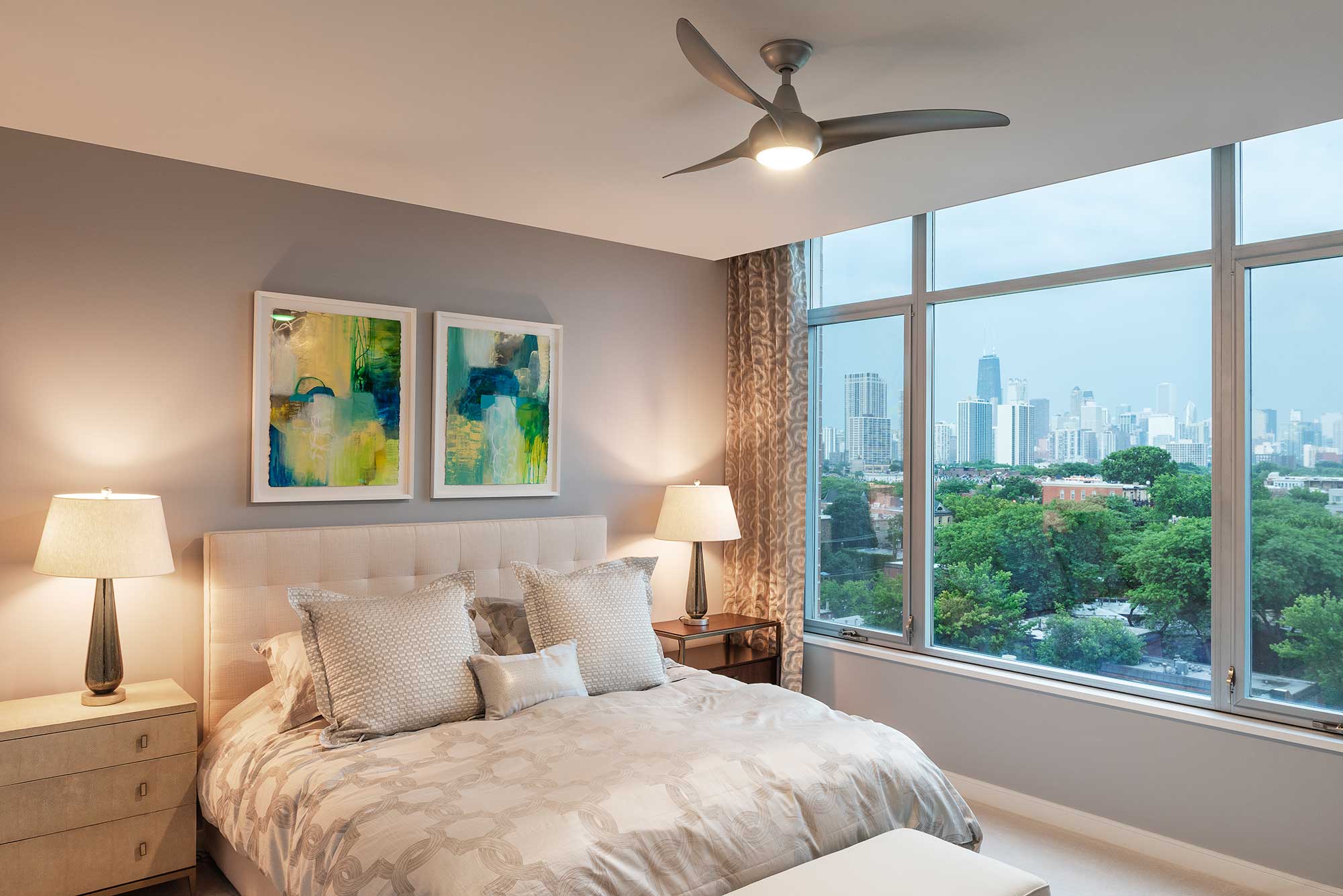
Lightology
Getting the right fan is all about proportion. Make sure to measure your room first so you know what size blade span to be looking for. The blade span of a fan is the diameter of the blades while they’re spinning, measured from the tip of one blade to the tip of the blade across from it. A fan that is too small for a space will not provide efficient air flow to the whole room. A fan that is too large will not provide any air flow directly below it.
BATHROOMS & SMALL SPACES (Less than 100sqft): 29” - 36” Blade Span
BEDROOMS & KITCHENS & DINING ROOMS (100-150sqft): 40-50” Blade Span
FAMILY ROOMS & LARGE ROOMS (350sqft): 52-60” Blade Span
EXTRA LARGE ROOMS (350sqft+): 60” Blade Span or Larger
2. Height Matters
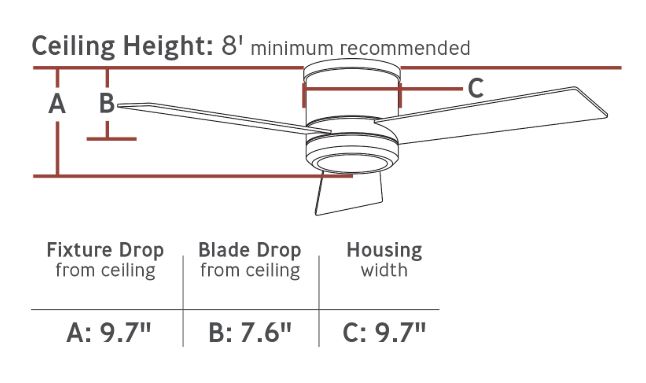
For optimum air circulation, you want your ceiling fan to be about 7-8 ft. from the floor and at least 8” down from the ceiling. For higher ceilings, you might need a downrod to suspend your fan farther from the ceiling. For spaces with lower ceilings a flush-mount model (or ceiling hugger) will keep your fan from being lower than 7 ft.

3. Switching Directions
Make sure your fan blades can switch directions. In the summer, your fan blades should run counter clockwise at the highest speed to push air down. In the winter, set your fan to run clockwise at a low speed so the blades gently pull cooler air up to keep your space warm and cozy.

4. Choosing a Style
Now that you know what size and mount your space requires, you’ll need to choose the right style. You could compliment the decor of your space, or have it just blend in and disappear.
A modern fan creates clean lines and compliments a minimalist decor, communicating style and a little edge. A traditional fan can be a little more ornate and works well in warm spaces to create a sophisticated atmosphere. Period specific fans have the benefit of modern technology while still showcasing a vintage look. Transitional styles provide modern lines with a little detail, and can compliment crown moldings nicely.
5. Controlling your Fan

Make sure your fan is controllable the way you want it. Some fans are wall controls, others come with remotes, and some are pull cord chains.
There are positive and negative aspects to all of these control options. Wall controls are the most reliable, don’t require a battery powered remote, and can’t get lost. However, they require more labor to install and cannot be easily relocated.
Remote controls can be controlled from anywhere within the room. They are cheaper and easier to install, but they do require batteries and run the risk of being lost or damaged. Replacement remotes will also need to be installed by a qualified electrician.
Pull cords are reliable, can’t get lost like a remote, but it is sometimes hard to tell what speed the fan is on. They can often hang too low in lower ceiling or may be hard to reach with a higher ceiling.

6. Installation
Make sure you consult with an electrician to ensure proper and secure installation of your new fan. If you only have a ceiling light fixture in the room, additional wiring may need to be run to accommodate the electrical needs of the fan. A good electrician will be able to guide you with these requirements.
Need help finding the perfect ceiling fan for your space?Schedule a design consultation today!

Understanding the NCIDQ and How it Benefits You as an Interior Designer
We are on a mission to help other designers pass the NCIDQ exam and become Registered Interior Designers! Just starting to think about taking the NCIDQ exam can be daunting. We break down the requirements with step by step instructions on how to become an NCIDQ Interior Designer this fall!
It’s that time of year again! Application review for the Fall 2019 NCIDQ exam has begun! Applications must be completed and submitted by July 15th in order to be considered to sit for the October 2019 exams. As a CIDQ Ambassador, this is an incredibly personal topic for me, and I’m on a mission to help other designers pass the NCIDQ exam and become Registered Interior Designers!
It’s officially been 1 year since I earned my NCIDQ certification and became a Registered Interior Designer in Illinois. This certification has benefited me in numerous ways, from opening my own business, to having the confidence and knowledge to effectively communicate on a job site. This exam is not just for commercial interior designers; I use my NCIDQ knowledge everyday as a residential interior designer and highly recommend all interior designers work towards this certification.
Over the last year, I have helped many aspiring designers work towards that certification as well. As the ASID IL NCIDQ Committee Chair, this spring I lead a study group of 5 designers towards NCIDQ success. Everyone in our study group passed their exams, with Meahgan Pearson and
Lauren Visco passing the first part of the exam, the IDFX and three people completing all of the exam sections this spring. Congratulations Kelly Somrek, Erin LeGate, and Candice Spotted Elk on becoming NCIDQ certificate holders!
Just starting to think about taking this exam can be daunting in itself! I’m here to help break down the requirements and get you on track for taking the exam this fall 2019! Keep reading below for step by step instructions on how you can become NCIDQ Certified.
Please note - the statements on this website are my own and not a reflection of CIDQ as an organization. This blog post is intended to be a supplementary guide for your NCIDQ journey. Please visit CIDQ.org for more information regarding qualifications, expectations, current prices, etc. Familiarize yourself with the CIDQ website, eligibility requirements, application process, registration process, and important dates and deadlines!

What is NCIDQ Certification and Who is CIDQ?
The NCIDQ exam stands for the National Council for Interior Design Qualification. This is a globally recognized exam and the highest standard an Interior Designer can earn. The NCIDQ Exam was created by the Council for Interior Design Qualification (CIDQ). Once you pass all three sections (IDFX, IDPX, Practicum) of the the NCIDQ Exam, you become an NCIDQ Certificate Holder. You can then use the NCIDQ appellation after your name: Sarah Schwuchow, NCIDQ. The exam is offered for the entire months of April and October at Prometric Testing Centers. All three sections of the exam are now computerized.

CIDQ History
CIDQ was created by the American Institute of Interior Designers (AID) and the National Society of Interior Designers (NSID) in the late 1960s. The group officially incorporated as a not-for-profit in 1974 and was the basis for issuing credentials to Interior Design professionals. The AID and NSID would eventually merge to become what is now the American Society of Interior Designers. CIDQ went on to run as an independent organization, which administers the NCIDQ exam
10 Reasons Why You Should Take the NCIDQ Exam
NCIDQ Certification sets you apart from unqualified designers and decorators.
It is an indicator of your proficiency and knowledge.
NCIDQ Certification shows your commitment to the Interior Design profession.
You’ll earn respect among your colleges, employers and clients.
You’ll have the potential to earn more money and promotions, as many firms require NCIDQ Certification.
Increasing the number of registered/licensed designers elevates our profession.
NCIDQ Certification helps with legislation and Interior Design rights.
In Illinois, you must be an NCIDQ Certificate Holder to become a Registered Interior Designer.
Registered Interior Designers in Illinois now have the right to file liens. Unregistered designers and decorators do not hold this right.
“To date, more than 30,000 people around the world have earned NCIDQ Certification, the goal standard for interior design professionals” (CIDQ.org).
What’s on the NCIDQ Exam?
“The strenuous requirements of the NCIDQ Examination give clients and employers added confidence in the caliber of work from NCIDQ Certified designers” (CIDQ.org).
The NCIDQ examination is no walk in the park. The level of difficulty proves that a NCIDQ designer possesses the knowledge and expertise for building systems, codes, construction standards, contract administration, design application, professional practice, and project coordination.
The exam is broken down into 3 parts: Interior Design Fundamentals (IDFX), Interior Design Professionals Exam (IDPX), and Practicum 2.0. Each section measures a candidate’s knowledge and proficiency on different topics related to health, safety, and welfare. All exams are taken during the entire month of April and October. Applicants have five years to complete all three exams. For the fall 2019 exam, you must have your application submitted by July 15th for review.
Fundamentals Exam (IDFX)
Eligibility: Candidates can take this part of the exam before completing their work experience hours. This exam can be taken as early as a student’s final year of school for a Bachelors or Masters program.
Exam Format: 125 multiple choice questions (100 scored and 25 unscored pilot questions)
Exam Length: 3 Hours
Application Fee for IDFX Only: $95.00
Registration Fee: $295.00
Passing Score: 500 (Scores are weighted and on a scale of 200-800)

Professional Exam (IDPX)
Eligibility: Candidates must complete their education and work hours before applying for this exam.
Exam Format: 175 multiple choice questions (150 scored and 25 unscored pilot questions)
Exam Length: 4 Hours
Application Fee for IDPX and Prac Only: $145.00
Application Fee for all 3 Sections: $225.00
IDPX Registration Fee: $350.00
Passing Score: 500 (Scores are weighted and on a scale of 200-800)

Practicum 2.0 (PRAC)
Eligibility: Candidates must complete their education and work hours before applying for this exam.
Exam Format: Interactive computerized exam consisting of 3 case studies: large commercial, small commercial, and multi-family residential
Exam Length: 4 Hours
Application Fee for IDPX and Prac Only: $145.00
Application Fee for all 3 Sections: $225.00
Practicum Registration Fee: $455.00
Passing Score: 500 (Scores are weighted and on a scale of 200-800)

Ready to Start Testing?
Step 1: Eligibility Requirements
First things first—are you qualified to take the NCIDQ Exam? Visit the CIDQ website below for eligibility requirements based your education and work experience.
Step 2: Create an Account
Before you can apply, you must create an account with CIDQ. Click below to register and then log in with instructions received in your email. If you have trouble, email inquiries@cidq.org for help.
Step 3: Applying for the Exam
There are two route options for applying for the NCIDQ Exam:
Option 1: Apply only for the IDFX. If you apply just for the IDFX now, you will need to submit another application for the IDPX and Practicum once you finish your work experience hours.
Application Fee for IDFX only: $95.00 (Second application for IDPX and Prac will be $145.00)
Option 2: Apply for all three sections.
Application Fee for all 3 Sections: $225.00
Applications are a one time fee. Your application will also require you to submit an official transcript from your institution and your work experience (for IDPX & Practicum 2.0). Make sure you leave enough time for your sealed official transcripts to arrive, as any incomplete applications will not be considered after the deadline and you’ll have to wait until the next testing season.
Step 4: Registering for the Exam
Once your application has been approved, you will receive an email notifying you that you that can register for the exam and schedule a date at a Prometric Testing Center. Make sure to register early so you can lock in your preferred exam date!
From this point, you have 10 testing windows to pass all three sections of the NCIDQ exam. If you are only taking the IDFX, you must pass that exam within 4 exam windows. The second stage (IDPX and Practicum) must then be completed within 10 testing windows. Any scores older than 5 years are automatically voided. Registration fees occur each time you take an exam.
Registration Fees
IDFX: $295.00
IDPX: $350.00
PRAC: $455.00
Step 5: Studying
Make sure you leave yourself adequate time to study for this exam. I recommend at least 10 weeks and join a study group. Qpractice is a great online resource to help you stay on schedule. For the fall 2019 Exam, The Qpractice Study Season begins July 1st. Stay tuned for my upcoming blog post on my tips and tricks for studying for the NCIDQ Exam!
Join the more than 30,000 people around the world that have earned their NCIDQ Certification!
“Being NCIDQ certified has abled me to recognize potential possibilities and issues within areas of the technical design aspect, from space planning to material selection. Our industry is so unique & creative that everyone already stands out, but being able to understand the fundamentals of health, safety, and welfare adequately propels designers to the next level. I am now a go-to resource amongst my colleagues, and I understand a lot more details when speaking with reps, architects and general contractors on projects. Knowledge is power! ”